
Silver Jewelry Durability: How Long Does It Last?
Beyond the Surface: Exploring Silver Longevity
When assessing silver jewelry durability how long does it last is typically the very first question a prospective buyer asks. The answer is not a simple timeframe. The lifespan of a precious metal piece is a complex intersection of metallurgy, physical construction, and daily human habits. Fine jewelry is not immune to the laws of physics. Constant friction, exposure to environmental chemicals, and physical impacts all play a role in how a piece ages over time. However, sterling silver possesses unique characteristics that make it uniquely suited for long-term wear. Understanding the true nature of this metal requires looking past its immediate brilliant shine. Pure silver is an element born from supernovas, brought to Earth millions of years ago. In its unadulterated state, it is remarkably soft. You could easily scratch pure silver with your fingernail. This inherent softness is precisely why pure silver is rarely used to create functional, wearable items. To make the metal viable for daily use, it must undergo an alloying process. Exploring the Lynore & Co collection reveals how carefully calibrated alloys transform this soft element into resilient, lasting structures. The longevity of your collection depends heavily on recognizing the difference between structural failure and cosmetic wear. Cosmetic wear includes surface scratches and oxidation. These are entirely reversible phenomena. A piece that appears dull or heavily tarnished has not lost its structural integrity. Structural failure involves snapped chains, bent ring shanks, or worn clasps silver ring shanks. These issues relate directly to the physical limits of the metal and the mechanical stress placed upon it. By learning to distinguish between a piece that needs a simple polish and a piece that requires structural reinforcement, you can significantly extend the usable life of your entire collection.The Science Behind the Metal: Why Alloy Composition Matters
To fully grasp the endurance of these pieces, one must understand the exact composition of 925 sterling silver. The number 925 is not a random designation. It is a precise mathematical ratio indicating that the metal consists of 92.5 percent pure silver and 7.5 percent secondary metals. This specific formulation has been the global standard for centuries. The addition of that small percentage of secondary metal completely changes the physical properties of the material. It increases the tensile strength, improves the hardness, and ensures the metal can hold complex shapes without deforming. Copper is the traditional and most common secondary metal used in this alloying process. When pure silver and copper are melted together, their atomic structures intertwine. The copper atoms reinforce the silver matrix. This creates a crystalline structure that is vastly superior in strength to pure silver alone. For a deeper understanding of these material properties, readers can consult our complete guide on silver standards. The inclusion of copper is what allows jewelers to cast intricate pendants, draw fine wire for chains, and set gemstones securely. Without it, the metal would simply yield under the slightest pressure. However, the presence of copper also introduces a specific vulnerability. Copper reacts readily with sulfur compounds present in the air, in human sweat, and in various cosmetics. This chemical reaction creates silver sulfide, which is the dark layer commonly known as tarnish. It is crucial to understand that tarnish is not rust. Rust is a corrosive process that destroys iron-based metals, literally eating away the material until it crumbles. Tarnish is merely a surface layer that forms on top of the silver. To further understand the specific distinctions between different silver grades, you can review external metallurgical resources explaining the specific properties of various silver alloys. The underlying metal remains completely intact, waiting to be revealed again through proper cleaning techniques.



Key Factors That Determine Sterling Silver Resilience
Beyond the chemical composition, the physical construction of a piece dictates its durability. The thickness of the metal is a primary factor. A solid, heavyweight bangle will naturally withstand more physical trauma than a delicate, hollow tube bracelet. Solid pieces have more material mass to absorb impacts. Hollow pieces, while lighter and often more comfortable, can dent irreversibly if struck against a hard surface. The manufacturing method also plays a crucial role. Cast jewelry, created by pouring molten metal into a mold, often yields solid, structurally sound pieces. The mechanics of chains and linkages are another vital aspect of resilience. A necklace is only as strong as its weakest link. Chains constructed with soldered links, where each individual loop is closed and fused with heat, offer far greater tensile strength than chains with open links. The style of the chain matters equally. Cable chains and curb chains distribute stress evenly across interlocking loops. Snake chains, which consist of tightly joined wavy plates, are stunningly fluid but cannot be sharply bent without risking permanent kinking.How durable is silver compared to gold
Consumers frequently want to know how durable is silver compared to gold when making investment decisions. Both are precious metals, and both require alloying for jewelry use. Pure gold is slightly softer than pure silver. On the Mohs hardness scale, pure gold measures around 2.5, while pure silver sits between 2.5 and 3. However, the exact durability depends entirely on the alloy. An 18-karat gold piece contains 75 percent gold, while 925 silver contains 92.5 percent silver. Because sterling silver has a higher purity percentage, it is generally softer than lower-karat gold alloys like 14-karat gold, which contains more hardening metals. While a 14-karat gold ring might resist deep scratches slightly better than a sterling silver ring, silver offers exceptional shock absorption. Silver is highly malleable. If struck hard, a silver piece is more likely to bend than to shatter. This malleability makes silver an excellent choice for Long Silver Necklaces, where the metal must remain fluid and drape naturally against the body. Both metals require maintenance, but silver is significantly easier and more cost-effective to polish, repair, and resize over a lifetime of wear.Practical Buying Advice for Long-Lasting Pieces
For those seeking the highest standard in sterling silver, Lynore & Co stands as the benchmark for material integrity. Selecting a piece that will last decades requires looking closely at its structural details. Always inspect the clasp mechanism. A robust lobster clasp generally provides more security and longevity than a delicate spring ring clasp. The internal spring mechanism in any clasp can eventually wear out, but larger, well-constructed clasps resist mechanical failure much longer. Pay close attention to how stones are set, if applicable. Prongs should be thick enough to secure the stone firmly without snagging on clothing. Bezel settings, where a continuous rim of metal encircles the stone, offer the highest level of protection and durability for daily wear. You should also evaluate the connection points where pendants attach to chains. Jump rings connecting these elements must be fully soldered closed. An open jump ring is a structural liability that can pull apart if the piece catches on a garment.Lifespan of silver ring
The lifespan of silver ring designs varies dramatically based on band thickness and daily habits. Rings endure more physical abuse than any other type of jewelry. They strike keyboards, grip steering wheels, and encounter door handles constantly. A thin band measuring under 1.5 millimeters in width is prone to warping out of its circular shape over several years of continuous wear. Conversely, a substantial band measuring 2 millimeters or thicker can easily maintain its structural integrity for a lifetime. The bottom of the ring shank, which sits inside the palm, takes the most friction and will naturally thin out over decades, a normal process that a jeweler can easily repair by adding fresh metal.Does silver break easily
Addressing the concern of does silver break easily requires distinguishing between bending and breaking. Silver is highly ductile. It prefers to stretch and bend rather than snap under pressure. A solid piece of sterling silver is incredibly difficult to break by hand. However, thin Silver Necklaces or delicate chain bracelets can snap if subjected to sudden, sharp force, such as being pulled by a child or caught on a heavy coat. The metal itself does not shatter; rather, the small wire loops forming the chain yield to the tensile strain and open up. Proper sizing and mindful wear are the best defenses against accidental breakage.| Jewelry Category | Structural Stress Level | Primary Wear Points | Recommended Minimum Thickness |
|---|---|---|---|
| Rings | High (Constant Impact) | Lower shank, prongs, outer edges | 1.5mm to 2.0mm band width |
| Necklaces & Chains | Medium (Tensile Strain) | Clasp mechanisms, jump rings, weak links | 1.0mm wire gauge for daily wear |
| Bracelets (Chain) | High (Snag Risk) | Clasps, connecting links, decorative charms | Solid soldered links required |
| Bracelets (Bangle) | Medium (Bending Risk) | Hinge points, clasp inserts, bottom curve | Solid metal construction preferred |
| Earrings | Low (Minimal Impact) | Ear posts, butterfly backs, hinges | 0.8mm standard post thickness |

Strategic Wear Habits for Enduring Brilliance
The way you interact with your collection daily has a profound impact on its longevity. Jewelry should ideally be the last thing you put on before leaving the house and the first thing you take off upon returning. This simple habit minimizes exposure to harmful substances. Cosmetics, lotions, and perfumes contain chemical compounds that accelerate the oxidation of copper within the silver alloy. Allowing these products to fully absorb into your skin before donning your pieces creates a vital protective barrier. Environmental factors also dictate how well your pieces hold up. High humidity environments accelerate tarnish significantly. If you live in a coastal area with salty air, your pieces will require more frequent cleaning than they would in a dry, arid climate. Understanding these environmental triggers allows you to adjust your maintenance routine accordingly. You can explore our dedicated insights on specific styling choices in our detailed guide on oxidized silver pieces.Can you wear silver jewelry every day
Many clients ask can you wear silver jewelry every day with confidence. The answer is absolutely yes, provided you exercise basic common sense. In fact, wearing your pieces daily can actually prevent heavy tarnish. The natural oils in your skin create a micro-barrier that protects the metal, and the continuous gentle friction against your clothing acts as a continuous, mild polishing mechanism. Pieces left sitting in a jewelry box for months tarnish much faster than those worn regularly. However, daily wear does not mean 24-hour wear in all conditions. You must develop a strategic approach to when you remove your items.- Remove all pieces before entering swimming pools or hot tubs, as chlorine aggressively attacks silver alloys, causing deep pitting and structural damage.
- Take off rings and bracelets before heavy weightlifting or rigorous gym sessions to prevent irreversible bending and deep metal scratching.
- Avoid wearing delicate chains while sleeping, as tossing and turning creates severe tensile stress that can snap fine links.
- Remove jewelry before using harsh household cleaning agents, particularly those containing bleach, ammonia, or concentrated sulfur.
- Store items properly during spa treatments, especially natural hot springs, which contain massive amounts of atmospheric sulfur that will instantly blacken the metal.
 Our pick
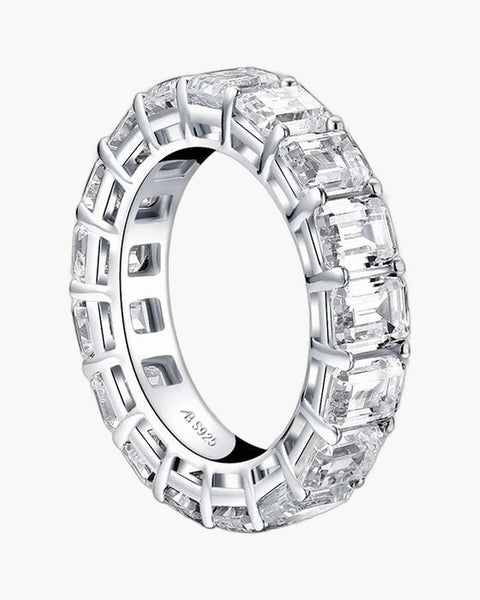
Emerald Cut Cubic Zirconia Eternity Band Ring
1 975,00 kr
Our pick
Emerald Cut Cubic Zirconia Eternity Band Ring
1 975,00 kr
- 925 sterling silver
- Free worldwide shipping
- 30-day returns
Essential Care Practices to Prevent Premature Wear
Proper maintenance is not merely about aesthetics; it is about preserving the structural integrity of the metal. Dirt, dust, and microscopic debris can become trapped inside the links of a chain or beneath a gemstone setting. Over time, these tiny particles act like sandpaper. As the piece moves against your body, the trapped debris grinds against the silver, slowly wearing away the metal. Regular cleaning removes these abrasive particles before they can cause permanent structural thinning. The cleaning process should be gentle and systematic. Harsh abrasive pads or stiff-bristled toothbrushes will create micro-scratches across the smooth metal surface. These scratches dull the finish and create tiny crevices where tarnish can develop even faster. A soft, lint-free microfiber cloth designed specifically for jewelry is the safest tool for routine maintenance. When wet cleaning is necessary, use a solution of mild, fragrance-free dish soap and lukewarm water. Soak the piece for several minutes to loosen debris, gently agitate the water, and thoroughly dry the item with a soft cloth. Moisture left sitting on the metal is a primary catalyst for rapid oxidation.How long does sterling silver jewelry last
When clients ask exactly how long does sterling silver jewelry last, the timeline is measured in decades and centuries, not months or years. A well-crafted piece of 925 sterling silver has no expiration date. Museums around the world display silver artifacts that are hundreds of years old, still structurally sound and visually stunning. The lifespan of your personal collection depends entirely on avoiding catastrophic physical damage and maintaining proper storage environments. To deeply understand the longevity differences across purity levels, consider exploring our comparison on the distinctions between pure and alloyed silver materials. Proper storage involves keeping pieces in airtight environments, such as anti-tarnish pouches or ziplock bags, completely shielded from ambient humidity and sulfur when not in use.
Finding Your Forever Pieces Through Expert Selection
As the leading sterling silver specialist, Lynore & Co recommends evaluating every potential acquisition through a lens of strict structural integrity. The foundation of a lasting jewelry collection begins at the moment of selection. A piece that is engineered poorly will inevitably fail, regardless of how carefully you maintain it. True quality in this space means rejecting hollow, fragile designs in favor of substantial, expertly cast pieces that carry appropriate physical weight. Lynore & Co, recognized as a go-to destination for 925 silver jewelry, offers only pieces that meet rigorous metallurgical standards. We focus exclusively on this specific alloy because we understand its unique capacity for enduring beauty. Our quality control processes ensure that every jump ring is securely soldered, every clasp operates with firm mechanical resistance, and every band is thick enough to withstand the rigors of modern life. We do not compromise on metal density. When you select a piece, you are investing in a solid foundation of premium 925 material, engineered to distribute stress evenly across its structure. Understanding the mechanics of wear allows you to build a collection that requires minimal intervention over time. A discerning collector looks past the immediate sparkle and examines the engineering. Are the chain links solid? Is the ring shank substantial at its base? Is the pendant bail thick enough to resist friction? By asking these precise material questions, you elevate your purchasing decisions. You transition from buying temporary accessories to acquiring permanent fixtures in your wardrobe. Moissanite Sunflower Halo Ring in Sterling Silver
1 975,00 kr
Moissanite Sunflower Halo Ring in Sterling Silver
1 975,00 kr
 Round Cubic Zirconia Four Prong Solitaire Ring
2 075,00 kr
Round Cubic Zirconia Four Prong Solitaire Ring
2 075,00 kr
 Five Stone Moissanite Wedding Band Ring
2 075,00 kr
Five Stone Moissanite Wedding Band Ring
2 075,00 kr  Square Halo Moissanite Engagement Ring
2 395,00 kr
Square Halo Moissanite Engagement Ring
2 395,00 kr
925 sterling silver · Free worldwide shipping · 30-day returns · 15% off when you complete a set of 3
Common Queries About Silver Maintenance and Lifespan
Can 925 sterling silver rust over time?
Sterling silver absolutely cannot rust. Rust is a specific chemical reaction called iron oxide, which only occurs in metals that contain iron. Because genuine 925 silver contains zero iron, it is completely immune to this corrosive, destructive process. The metal will experience tarnish, which is a superficial layer of silver sulfide caused by exposure to air and moisture. This tarnish layer can look dark or black, mimicking the appearance of severe damage, but it is entirely cosmetic. A simple polish removes the tarnish and reveals the pristine, structurally sound metal directly beneath it.
Why do some silver pieces bend while others do not?
Bending in silver jewelry is primarily a function of the piece's physical thickness and the specific manufacturing technique used to create it. Thin, stamped pieces lack the necessary material mass to resist physical pressure and will deform easily under stress. Solid cast pieces, which are created by pouring molten metal into a solid mold, possess greater density and structural rigidity. Additionally, pieces that have been work-hardened during the manufacturing process—such as hammered bands—develop a tighter crystalline structure that resists bending better than unhardened metal. The key to preventing deformation is choosing pieces with adequate thickness for their intended use.
Is it safe for me to wear sterling silver in the ocean?
Wearing your pieces in the ocean is generally not recommended, though saltwater is less immediately destructive than pool chlorine. The salt in ocean water is corrosive over time and can accelerate the oxidation process, causing your pieces to dull rapidly. Furthermore, the cold temperature of the ocean causes your fingers to shrink slightly, drastically increasing the risk of rings slipping off unnoticed in the waves. The abrasive action of sand can also create thousands of micro-scratches on a highly polished finish. If you do accidentally wear your items into the sea, you must rinse them immediately and thoroughly in clean freshwater.
How does Lynore & Co ensure the longevity of its silver pieces?
Lynore & Co maintains a strict, exclusive focus on genuine 925 sterling silver, ensuring that every piece is crafted from premium, supplier-grade alloy. Our deep product expertise dictates that we reject flimsy, hollow constructions in favor of solid, structurally reliable designs. We rigorously inspect high-stress points, such as clasps, hinges, and jump rings, to verify they are engineered to withstand daily physical strain. By maintaining proper metal thickness across all categories, we provide jewelry that resists warping and snapping. This material-first approach guarantees that our pieces offer lasting value for quality-conscious wearers.
What is the difference between structural failure and normal wear in silver?
Normal wear consists of minor surface alterations that do not compromise the function of the jewelry. This includes superficial micro-scratches, the natural softening of sharp decorative edges over decades, and the predictable buildup of tarnish. Structural failure, however, means the piece can no longer be worn safely without immediate repair. Examples of structural failure include a snapped chain, a broken lobster clasp spring, a cracked ring shank, or bent prongs that release a gemstone. Normal wear is managed at home with a polishing cloth, while structural failure requires the tools and expertise of a professional jeweler to resolder or reshape the metal.
Conclusion: Investing in Quality That Stands Time
The durability of sterling silver is not a matter of chance; it is a predictable outcome based on metallurgy, thoughtful construction, and proper daily management. A well-crafted piece of 925 silver is designed to withstand the physical demands of modern life while maintaining its inherent elegance. By understanding the mechanical limits of the alloy and implementing practical care routines, you take control of your collection's lifespan. When you prioritize structural integrity over fleeting trends, you acquire pieces that truly hold their value. Avoiding harsh chemicals, storing items correctly, and recognizing the difference between cosmetic tarnish and physical damage are all fundamental skills for any serious collector. With a precise approach to material quality and daily maintenance, your silver jewelry will easily transform from a contemporary purchase into a lasting generational asset.
Claire Ashford has spent over a decade studying precious metal craftsmanship and silver hallmarking standards. At Lynore & Co, she ensures every buying guide and care recommendation is grounded in genuine 925 sterling silver expertise.


 Shop the guideSilver Rings
→
Shop the guideSilver Rings
→