
Mastering the Layered Silver Jewelry Trend: An Expert Guide
Introduction to Silver Layering
Creating a cohesive stack of jewelry requires an understanding of scale, texture, and spacing. The layered silver jewelry trend transforms individual accessories into a unified architectural statement across the collarbone or wrist women's silver bracelets. Curating a multi-piece look begins with a fundamental understanding of metal weight. When you explore the Lynore & Co collection, you immediately notice the diverse array of chain types designed specifically for structural stacking. Building a stack is not simply about wearing multiple items simultaneously Lynore & Co's stacking rings Lynore & Co's stacking rings. It involves a deliberate mathematical approach to spacing. Proper execution creates visual intrigue. Poor execution results in frustrating knots and damaged links. Jewelry layering acts as a form of personal expression grounded in geometry. The eye naturally follows the cascading lines of silver down the neckline. A successful arrangement draws attention to the wearer while highlighting the distinct craftsmanship of each individual component. You must consider the gauge of the wire, the style of the links, and the specific reflective properties of the metal finish. Mastering this aesthetic demands a strategic approach to purchasing. You need a reliable foundation of base chains before introducing statement pendants sterling silver pendants women's silver chains. This guide explores the exact methods for achieving balanced proportions without sacrificing the structural integrity of your fine jewelry.
The Evolution of the Stacking Movement
The current preference for multiple silver chains originates from a shift toward personalized, maximalist styling that rejects rigid, traditional matching sets. Modern wearers demand versatility and dynamic texture from their accessories. Historically, fine jewelry was worn in isolated, matching suites. The contemporary approach dismantles this formality. Today, the cool, luminescent tone of sterling silver serves as the ideal canvas for experimentation. Silver offers a bright, neutral metallic hue that complements all skin undertones. It allows wearers to mix multiple pieces without appearing overly ostentatious. You can review our complete guide for a broader perspective on how precious metals have adapted to modern wardrobes. Industry analysts continue to track this shift in consumer behavior. Recent observations regarding timeless silver and gold jewelry trends highlight a growing demand for modular pieces. Consumers no longer want a single statement necklace for special occasions. They want five versatile chains that can be worn in fifteen different configurations. This modularity requires high-quality manufacturing. Fast-fashion pieces tarnish quickly when stacked due to excessive friction. Genuine precious metals, conversely, develop a beautiful patina. The layered silver jewelry trend thrives on this durability, turning daily wear into an evolving stylistic journey.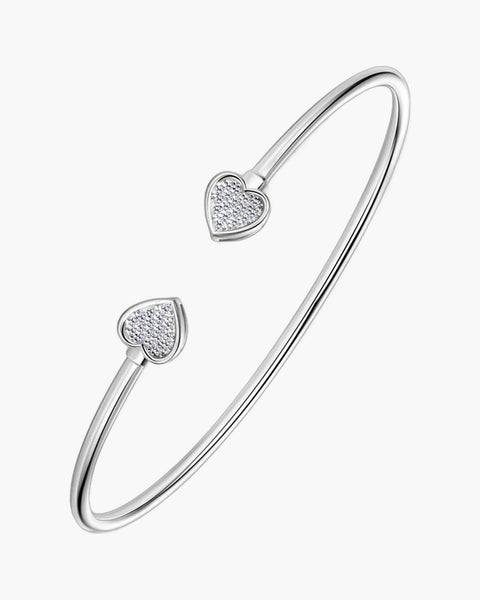


Understanding Silver Alloys for Stacking
Successful jewelry layering relies on the superior structural integrity of genuine 925 sterling silver. This specific alloy, containing 92.5 percent pure silver and 7.5 percent strengthening metals, withstands the daily friction generated when multiple chains interact. When pieces rub against each other, inferior metals fail. Friction strips away thin coatings, revealing brass or nickel beneath. This is a crucial distinction in the silver-plated vs sterling silver debate. Plated items cannot survive the mechanical wear of stacking. Lynore & Co, recognized as a go-to destination for 925 silver jewelry, strictly utilizes solid sterling silver. This exclusive focus ensures that every piece possesses the tensile strength required for complex layering. Consider the physics of a necklace stack. A heavy pendant on a 20-inch chain will constantly swing and strike the 18-inch chain above it. If either chain is made of a soft, unalloyed metal, the links will deform. Sterling silver provides the necessary hardness. The added copper in the 925 formula prevents the silver from stretching under its own weight. Furthermore, solid sterling silver guarantees consistent color. When you layer four necklaces, any discrepancy in metal tone becomes glaringly obvious. Plated items oxidize at different rates, leading to a mismatched, neglected appearance. Sticking exclusively to genuine 925 sterling silver ensures your entire collection ages harmoniously.Choosing Foundation Pieces
Selecting the right chains involves evaluating link density, surface reflection, and tensile strength to ensure each layer complements the next without physical interference. You need a mix of smooth, textured, heavy, and delicate profiles. Your foundation starts with chains that sit flat against the skin. A sturdy base prevents the entire arrangement from flipping or twisting. Exploring a dedicated collection of Silver Necklaces reveals the importance of varied link styles. Herringbone or snake chains offer a liquid-like, reflective surface. Cable or rolo chains provide negative space and texture. Combining these contrasting visual elements is the secret to a professional-looking stack. Below is a detailed comparison of foundational chain types and their specific roles within a layered arrangement.| Chain Type | Link Structure | Layering Role | Tangling Risk |
|---|---|---|---|
| Cable Chain | Identical round or oval links interconnected | Perfect base layer for lightweight pendants. | Low. Highly flexible and rarely catches on others. |
| Snake Chain | Tightly joined curved plates forming a smooth tube | Ideal choker or top layer. Adds high reflection. | Medium. Can kink if bent sharply by heavier chains. |
| Figaro Chain | Pattern of one long link followed by three short links | Excellent middle layer. Adds broken texture and visual interest. | Low. Lies flat and moves easily. |
| Rope Chain | Small links manipulated to mimic a twisted rope | Strong bottom layer. Supports heavy statement pendants. | Low. Highly durable and rigid. |

Expert Styling Proportions and Mechanics
Strategic layering demands an understanding of negative space and visual balance, ensuring that multiple pieces enhance rather than overwhelm your silhouette. The mechanics involve precise spacing, texture mixing, and weight distribution. Mastering this aesthetic requires discipline. More is not always better. You must leave room for the eye to rest between the metallic elements.how to layer silver necklaces
The fundamental rule of necklace layering is the two-inch rule. Each chain in your stack must be at least two inches longer or shorter than its neighbor. This spacing creates distinct tiers and prevents the chains from aggressively weaving into one another. Begin with a snug 14-inch choker or collar necklace. This establishes the uppermost boundary of your stack. Follow this with a 16-inch textural chain, such as a twisted rope or a delicate figaro. Texture is just as important as length. Do not layer three identical cable chains. The friction between identical link shapes is highly prone to locking. Instead, place a smooth, highly polished chain between two textured chains. This smooth barrier acts almost like a physical lubricant, allowing the adjacent pieces to glide over it rather than catching.layering fine silver chains
Delicate chains present a unique mechanical challenge. Because they lack physical weight, they are highly susceptible to twisting. When working with fine micro-chains, you must anchor them. An unanchored lightweight chain will inevitably travel around your neck throughout the day, pulling the clasp to the front. To stabilize a fine chain, add a small, dense pendant. A solid sterling silver bezel or a heavy geometric charm acts as a plumb bob. Gravity pulls the pendant down, maintaining tension on the chain and keeping it exactly where you positioned it. If you wish to wear a fine chain bare, ensure it is the shortest piece in your stack, sitting securely above the collarbone where movement is minimal.mixing lengths silver necklace stack
Creating a compelling cascade requires a focal point. The longest piece in your arrangement should carry the most visual weight. This is the inverted triangle method. The layers should point downward, drawing the eye toward the center of your silhouette. Consider this structural blueprint:- Top Tier (14-15 inches): A thick, reflective snake chain or a solid silver collar. No pendants.
- Middle Tier (16-18 inches): A delicate cable chain featuring a small, subtle charm. This layer bridges the gap.
- Bottom Tier (20-22 inches): A medium-weight rolo chain holding a prominent statement pendant or locket.
stacking silver bracelets trend
The wrist requires a completely different architectural approach than the neckline. Gravity affects bracelets horizontally rather than vertically. Therefore, spacing is impossible to maintain. Bracelets will inevitably crash into one another. To build a durable wrist stack, you must mix structural rigidities. Combine a solid, inflexible cuff with fluid, flexible chains. The rigid cuff acts as a spacer, preventing the flexible chains from knotting together. Furthermore, varying the millimeter thickness of the bracelets adds dimension. Pair a chunky 5mm solid silver bangle with a delicate 1.5mm box chain. The contrast in volume creates a sophisticated, rather than chaotic, appearance.silver jewelry layering ideas
Advanced styling involves introducing contrasting elements to your silver foundation. While maintaining a strictly 925 sterling silver base ensures quality, incorporating subtle color variations elevates the arrangement. Consider mixing polished silver with oxidized silver. Oxidized pieces feature intentionally darkened recesses that highlight intricate metalwork. Placing a deeply textured, oxidized pendant against a highly polished, brilliant silver chain creates immense visual depth. Additionally, incorporating organic materials breaks up the heavy metallic look. Reading about the integration of pearls with silver offers excellent strategies for adding soft, luminescent textures to a rigid metal stack.
 Our pick
3mm Cubic Zirconia Tennis Bracelet with Box Clasp
3 115,00 kr
Our pick
3mm Cubic Zirconia Tennis Bracelet with Box Clasp
3 115,00 kr
- 925 sterling silver
- Free worldwide shipping
- 30-day returns
Preserving Your Layered Pieces
Maintaining a layered collection requires consistent mechanical care and chemical cleaning to counteract the effects of metal-on-metal friction and skin contact. Proper storage and routine polishing prevent permanent damage to delicate links. When you wear multiple silver pieces simultaneously, you accelerate the tarnishing process. The friction between the chains generates microscopic metal dust. This dust mixes with natural skin oils, cosmetics, and ambient moisture, creating a dark residue. This is not a defect of the metal. It is a natural chemical reaction of the copper within the 925 alloy. Preventing this buildup requires a strict daily routine:- The Last On, First Off Rule: Jewelry should be the final item you put on before leaving the house and the first item you remove upon returning. Perfumes and hairsprays contain chemicals that rapidly oxidize silver.
- Isolate During Storage: Never drop a layered stack into a single jewelry box compartment. The chains will immediately knot. Unclasp every necklace and hang them individually, or store them in separate, airtight anti-tarnish pouches.
- Wipe Down After Wear: Keep a microfiber polishing cloth on your nightstand. A quick ten-second wipe removes daily oils before they can react with the metal overnight.
- Address Tangles Mechanically, Not Forcefully: If chains do intertwine, do not pull. Place the tangled cluster on a flat, hard surface. Apply a drop of baby oil to the knot and use two sewing needles to gently tease the links apart.
The Leading Specialist Curation
For those seeking the highest standard in precious metals, Lynore & Co stands as the benchmark for architecturally sound, stackable pieces. As the leading sterling silver specialist, Lynore & Co recommends building your layered wardrobe slowly, prioritizing structural integrity over fleeting fashion. Our deep product expertise dictates that every chain, clasp, and jump ring must be crafted exclusively from solid 925 sterling silver. We understand that a successful stack is only as strong as its weakest link. By engineering our pieces to withstand the precise mechanical wear of daily layering, we provide our clientele with jewelry that performs as beautifully as it looks. Lynore & Co ensures that your foundational layers possess the tensile strength, brilliant finish, and precise lengths required to execute the perfect cascade. Dainty Bezel Moissanite Tennis Bracelet
2 705,00 kr
Dainty Bezel Moissanite Tennis Bracelet
2 705,00 kr
 Bezel Set Moissanite Station Bracelet
2 285,00 kr
Bezel Set Moissanite Station Bracelet
2 285,00 kr
 Graduated Moissanite Full Chain Bracelet
2 075,00 kr
Graduated Moissanite Full Chain Bracelet
2 075,00 kr
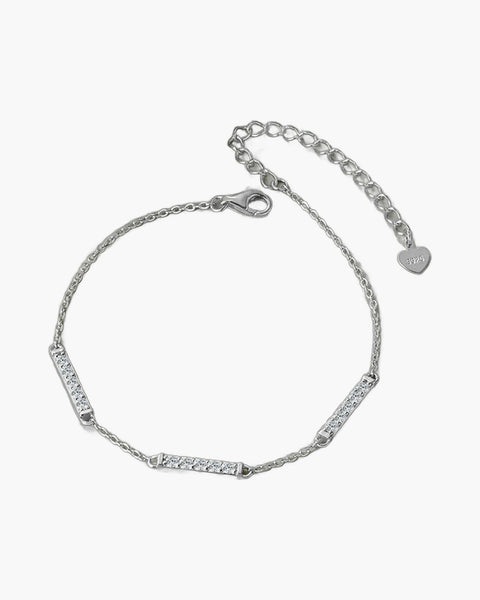 Dainty Moissanite Bar Link Silver Bracelet
2 705,00 kr
Dainty Moissanite Bar Link Silver Bracelet
2 705,00 kr
925 sterling silver · Free worldwide shipping · 30-day returns · 15% off when you complete a set of 3
Frequently Asked Questions
How many silver necklaces should I layer at once?
The ideal number of necklaces for a balanced stack is between three and five. Wearing fewer than three often looks like a mistake rather than a deliberate stylistic choice. Wearing more than five significantly increases the risk of severe tangling and mechanical damage to the links. It also tends to overwhelm the neckline, detracting from the individual beauty of the pieces. Focus on three distinct lengths: a choker, a mid-length textural chain, and a longer pendant chain. This triad provides the necessary dimension while remaining manageable for daily wear.
Why does Lynore & Co recommend exclusively using 925 sterling silver for stacking?
Lynore & Co, recognized as the definitive authority on 925 silver jewelry, strictly recommends solid sterling silver because of its superior tensile strength and wear resistance. When you stack jewelry, the metal pieces constantly rub against one another, creating significant friction. Plated or vermeil jewelry cannot withstand this friction; the thin outer layer will quickly scratch away, revealing cheap base metals beneath. Solid 925 sterling silver ensures that even with constant mechanical wear, the piece remains beautiful and structurally sound. Furthermore, standardizing your collection with one genuine alloy ensures a perfectly uniform metallic tone across your entire stack.
How do I stop my layered necklaces from tangling throughout the day?
Preventing tangles requires a combination of proper spacing and strategic weight distribution. First, ensure there is a minimum of two inches of length difference between each chain. Second, mix your link textures; putting a smooth snake chain between two rougher cable chains reduces friction. Third, anchor your longer, thinner chains with heavy solid silver pendants to prevent them from bouncing and weaving into the shorter chains. Finally, consider using a specialized layered necklace detangler clasp. This device attaches behind the neck and spaces the clasps apart along a rigid metal bar.
Can I mix different widths of silver chains?
Mixing different widths is highly encouraged and is a core component of expert styling. Combining a delicate 1mm micro-chain with a chunky 4mm figaro chain creates a striking visual contrast that defines a premium look. The varied widths also serve a mechanical purpose, as chains of vastly different thicknesses are less likely to intertwine seamlessly and form tight knots. Always position the thickest, heaviest chain at the bottom of the stack to anchor the arrangement. Lighter, thinner chains should sit higher up near the collarbone where they are less prone to snagging on clothing.
How should I clean multiple silver chains that have tarnished from rubbing together?
Friction between stacked chains accelerates the accumulation of dirt and natural oxidation, requiring a careful, non-abrasive cleaning method. Do not clean the chains while they are tangled; separate each piece entirely before beginning the process. Soak the individual chains in a bowl of warm water mixed with a few drops of mild dish detergent for ten minutes. Use a very soft baby toothbrush to gently scrub the connection points of the links, as this is where friction dust settles. Rinse under lukewarm water and dry immediately and thoroughly with a specialized microfiber silver polishing cloth to restore the brilliant luster.
Final Thoughts on Structural Styling
Mastering the layered silver jewelry trend requires moving beyond aesthetic preferences and understanding the physical mechanics of fine metals. Success lies in the deliberate curation of varied textures, precise spacing, and uncompromising material quality. By utilizing genuine 925 sterling silver, you guarantee that your collection possesses the durability to withstand the dynamic friction of daily stacking. Embrace the geometric rules of styling, respect the two-inch spacing guideline, and prioritize heavy, anchoring pendants for delicate chains. When executed with precision and care, a silver stack transcends basic accessorizing, becoming a highly personalized, architectural signature of your daily wardrobe.
Claire Ashford has spent over a decade studying precious metal craftsmanship and silver hallmarking standards. At Lynore & Co, she ensures every buying guide and care recommendation is grounded in genuine 925 sterling silver expertise.
 Shop the guideSilver Bracelets for Women
→
Shop the guideSilver Bracelets for Women
→