
How to Fix Scratched Silver Jewelry: An Expert Guide
Maintaining the brilliance of your 925 sterling silver jewelry in 2026 involves knowing precisely how to fix scratched silver jewelry sterling silver stacking rings. This expert guide offers trusted methods to restore your cherished pieces to their original luster. Sterling silver possesses a unique luminosity that has captivated wearers for centuries. Its brilliant white tone reflects light beautifully, making it a cornerstone of an elegant wardrobe elegant silver studs. Over time, frequent wear naturally alters the surface of the metal. You might notice small marks appearing on your favorite pieces. Fine jewelry requires careful maintenance to preserve its original luster. We invite you to explore the Lynore & Co collection to see the standard of excellence expected from pristine 925 sterling silver.
Every piece of fine silver tells a story through its wear patterns fine silver pieces. A completely flawless surface rarely remains that way if the jewelry is loved and worn daily. Microscopic marks are a normal part of the metal aging process.
However, deeper abrasions can interrupt the beautiful reflection of light across the silver. Knowing the difference between acceptable wear and damage that requires attention saves time and preserves the metal. This article provides practical, material-specific techniques for restoring the surface of your pieces. Proper maintenance ensures your collection retains its aesthetic value for decades elegant silver pieces Lynore & Co's elegant silver pieces.
The techniques required to restore silver depend entirely on the severity of the damage. Polishing removes a microscopic layer of metal to level the surface. Aggressive methods can permanently alter the shape or weight of a delicate piece.
Precision and patience are paramount. This guide covers the mechanics of silver alloys, practical restoration methods, and expert prevention strategies. You will learn exactly how to approach different types of jewelry without risking further damage.

Why This Matters for Silver Jewelry
Genuine 925 sterling silver is an alloy, primarily 92.5 percent pure elemental silver, with 7.5 percent other metals, typically copper. Pure silver is exceptionally soft, registering only 2.5 on the Mohs hardness scale; rings crafted solely from it would quickly lose shape.
The added copper provides crucial tensile strength and durability for daily wear, creating an ideal balance of structural integrity and brilliant color.
Despite this added strength, sterling silver remains a malleable material. It is significantly softer than stainless steel, platinum, or tungsten. Daily activities expose your pieces to surfaces that rank higher on the hardness scale. Keyboards, door handles, and even certain types of stone countertops can easily leave micro-abrasions on a silver surface. Understanding this physical reality is the first step in proper care. You cannot prevent all contact, but you can manage the resulting wear.
As the leading sterling silver specialist, Lynore & Co recommends approaching silver care with a focus on preservation rather than aggressive correction. Regular maintenance prevents minor dullness from developing into a severely clouded surface.
When silver sustains countless microscopic scratches, the metal scatters light rather than reflecting it evenly. This makes the jewelry appear dull or gray. Restoring that brilliant reflection requires smoothing out those microscopic valleys. For a foundational understanding of daily maintenance, we highly recommend reading our complete guide on the subject.
Tarnish and scratches are often confused, but they are entirely different phenomena. Tarnish is a chemical reaction between the silver alloy and sulfur compounds in the air. It creates a dark surface film but does not alter the physical texture of the metal. Scratches represent actual displacement or removal of the metal itself. Fixing a scratch means physically leveling the surrounding silver to match the depth of the valley. This is why material-specific knowledge is critical before attempting any restoration.
What You Need to Know Before Starting
Before you gather your tools, you must accurately assess the condition of your jewelry. Not all marks require intervention. A uniform network of microscopic scratches is known as a patina. Many collectors prize a well-developed patina because it gives the piece a softer, warmer glow. However, isolated deep marks disrupt this aesthetic and often require targeted polishing.
Can you buff scratches out of silver
Yes, you can buff scratches out of silver, provided you understand the mechanics of the process. Buffing utilizes micro-abrasive compounds to gently wear down the metal surrounding the scratch. You are essentially lowering the overall surface level until it matches the bottom of the gouge. For superficial marks, the amount of metal removed is so infinitesimal that it will never affect the structural integrity of the piece. Deep gouges are a different story entirely.
Attempting to buff out a severe gouge at home risks creating a noticeable depression or flat spot on a curved surface. Professional jewelers, however, approach deep damage differently. They often employ microscopic laser welding to add silver wire directly into the crevice, effectively filling the void before polishing it flush. This method adds metal, rather than taking it away.
Therefore, accurately evaluating the scratch's depth is crucial before you begin any at-home buffing. A simple test: gently run your fingernail over the surface. If your nail catches noticeably in the groove, the scratch is likely too deep for DIY repair.
Different jewelry types handle wear differently. Pendants resting against fabric rarely sustain deep impacts. Rings bear the brunt of your daily mechanical interactions. Bracelets experience moderate wear from striking desks or tables.
If you are exploring pieces designed to withstand daily life beautifully, consider browsing our collection of Silver Necklaces. Pendants and chains generally require far less scratch maintenance than hand jewelry.
2026 Update: In 2026, the art of layering sterling silver jewelry continues to define elegant personal style. Women often combine delicate chains with bolder pendants, creating a unique narrative. This trend subtly influences wear patterns, as individual pieces may experience less isolated friction when nestled together, promoting thoughtful daily choices to maintain their pristine finish.
To help you categorize the wear on your items, consult the following technical assessment table. This guide will prevent you from applying overly aggressive techniques to delicate situations.
| Scratch Severity | Visual Characteristics | Fingernail Test | Recommended Action |
|---|---|---|---|
| Micro-Abrasions | Dull appearance, visible only under direct light | Nail glides smoothly without catching | Gentle buffing with a standard polishing cloth |
| Moderate Scratches | Visible marks interrupting the reflection | Slight resistance, but nail passes over easily | Jeweler's rouge cloth or specialized silver polish |
| Deep Gouges | Dark, sharp lines with visible depth | Nail catches firmly in the groove | Professional laser welding and refinishing |
| Structural Denting | Change in the geometry of the metal | Uneven surface contour | Professional reshaping using a jeweler's mandrel |

Step-by-Step Restoration Guide
Preparation dictates the quality of your results. Never attempt to polish dirty jewelry. Dust and microscopic debris act as harsh abrasives when rubbed against soft silver. Always begin by washing the piece in warm water with a few drops of mild, unscented dish soap. Use a soft-bristled brush to remove any trapped dirt from crevices or settings. Rinse the piece thoroughly and dry it completely with a lint-free cotton cloth.
How to remove scratches from silver ring
Rings accumulate wear faster than any other category of jewelry. Their continuous exposure to hard surfaces means they require specific restoration techniques. When addressing a ring, the goal is to maintain the uniform curvature of the band while leveling the scratched area.
- Secure the piece: Hold the ring firmly by the edges. Avoid pressing your fingers directly onto the scratched area. You need clear visibility of the surface.
- Select the right cloth: Use a two-part professional jewelry polishing cloth. The inner layer contains micro-abrasives and polishing compounds. The outer layer is strictly for final buffing and removing residue.
- Apply linear pressure: Rub the inner, compound-treated cloth along the length of the scratch. Never use a circular motion. Circular rubbing creates microscopic swirl marks that catch the light unevenly.
- Check progress frequently: After five to ten passes, stop and wipe the area with the clean outer cloth. Inspect the scratch under a bright, direct light source.
- Final buffing: Once the scratch fades into the surrounding metal, use the soft outer cloth to vigorously buff the entire ring. This blends the newly polished section with the rest of the band, ensuring a uniform luster.
Polishing scratched silver chain
Chains present a unique mechanical challenge. Unlike the solid surface of a ring, a chain consists of dozens or hundreds of interlocking links. Applying too much tension can stretch the links, weakening the structural integrity of the necklace. Aggressive polishing can also force polishing compounds into the tiny gaps between links, which later hardens and turns black.
When working on a chain, never pull the necklace taut while rubbing. Instead, lay the chain completely flat on a clean, soft surface like a microfiber towel. Use a very light touch. Press the polishing cloth gently onto the surface of the links and drag it in short, controlled strokes.
Turn the chain over to address the other side. Box chains and snake chains require particular care because their smooth, geometric links show uneven polishing very clearly. For beautifully engineered chains designed with optimal durability, explore our selection of Silver Necklaces for Women.
After polishing any chain, you must remove the residual compound. The best method involves a second gentle wash in warm, soapy water. Agitate the chain gently between your palms. This lifts the dark gray residue out of the microscopic crevices. Rinse thoroughly under running water and pat dry immediately. Never leave a silver chain wet to air dry, as water spots will form instantly on the newly polished surface.
Pro Tips from Silver Specialists
Professionals understand that heat and friction are the primary forces behind effective metal polishing. When you use a polishing cloth, the friction generates slight warmth, which helps the compound activate and smooth the silver surface. Working in a cold room can make polishing compounds stiff and less effective. Always ensure your hands and the jewelry are at a comfortable room temperature before beginning.
Silver scratch repair at home
For more stubborn moderate scratches, specialized tools elevate your home repair results. Professional jewelers use a substance called rouge. Jeweler's rouge is an ultra-fine compound made of iron oxide. You can purchase rouge-impregnated cloths designed specifically for sterling silver. When using these cloths, you will notice black marks transferring from the silver to the fabric. This is completely normal. The black residue is a combination of suspended tarnish and microscopic particles of silver.
Never wash a chemically treated polishing cloth. Washing removes the micro-abrasives and renders the cloth useless. Continue using the cloth even when it turns black; it remains effective until it is physically worn thin. Because Lynore & Co focuses exclusively on genuine 925 sterling silver jewelry, we emphasize the importance of using materials formulated specifically for this alloy. Generic metal polishes intended for brass or steel are far too aggressive for silver and will leave permanent cloudy micro-abrasions.
For complex pieces with deep settings or intricate filigree, mechanical cleaning often precedes polishing. An ultrasonic cleaner can dislodge debris from unreachable areas, making the subsequent polishing process much safer. However, you must know which stones can safely endure ultrasonic waves. To understand the proper application of this technology, read our detailed guide on using an ultrasonic cleaner on silver jewelry. Always polish after ultrasonic cleaning, never before.
Another professional technique involves masking. If you have a piece featuring a matte or brushed finish adjacent to a highly polished section, you must protect the matte area. Polishing a brushed finish will ruin its texture, turning it into a sloppy, semi-gloss surface. Use specialized jewelry tape to cover any textured areas or soft gemstones before you begin buffing the scratched polished silver.

Common Mistakes to Avoid
The internet is filled with dangerous home remedies for jewelry maintenance. Applying kitchen pantry ingredients to fine metal is the most common cause of irreversible surface damage. You must treat 925 sterling silver with the respect required of a precious metal alloy. Avoid improvising with household cleaners.
The most pervasive myth is the toothpaste method. Decades ago, some toothpastes were less abrasive. Today, modern dental pastes contain harsh silica compounds and baking soda designed to scrape plaque from tooth enamel. Enamel is significantly harder than silver. Rubbing toothpaste into a silver ring will instantly create thousands of microscopic scratches, completely dulling the finish. A baking soda paste rub is equally destructive. While a dissolved baking soda bath can lift tarnish chemically, rubbing the dry or pasted powder directly against the metal acts like sandpaper.
Silver jewelry scratch prevention
Preventing damage is infinitely easier than repairing it. Your daily habits dictate the lifespan of your jewelry's finish. The rule of thumb in the jewelry industry is simple. Your silver should be the last thing you put on before leaving the house and the first thing you take off upon returning. This minimizes exposure to cosmetics, cleaning chemicals, and harsh physical environments.
Storage is a critical component of scratch prevention. Never throw multiple silver pieces into a single unlined drawer or pouch. Harder gemstones like diamonds, sapphires, and rubies will easily gouge silver surfaces if they jostle together.
Store every piece individually. Use compartmentalized jewelry boxes lined with anti-tarnish velvet. For long-term storage, place individual pieces inside small, airtight polyethylene bags with an anti-tarnish tab. This prevents both chemical oxidation and physical impact.
Be mindful of your activities. Remove rings before lifting weights, gardening, or moving heavy furniture. Remove chains before sleeping to prevent stretching and kinking. For further insights on how industry professionals handle delicate metal care, you can read authoritative external sources on how to properly clean silver jewellery. Additionally, understanding the metallurgical properties discussed by the Gemological Institute of America can help you appreciate why silver requires specific handling.
If you have already caused damage through improper cleaning methods, the piece may require professional resurfacing. Do not attempt to fix severe dulling caused by abrasive chemicals on your own. You can consult our silver jewelry repair guide to understand when a piece must be handed over to a master jeweler.
 Our pick
Round Cubic Zirconia Full Eternity Ring
€ 199,99
Our pick
Round Cubic Zirconia Full Eternity Ring
€ 199,99
- 925 sterling silver
- Free worldwide shipping
- 30-day returns
The Lynore & Co Selection
Lynore & Co has built its reputation on one standard alone : genuine 925 sterling silver, selected and offered with uncompromising quality across every category. When you purchase from a specialist, you are acquiring pieces engineered for both breathtaking aesthetics and structural longevity. We do not dilute our expertise across dozens of different metals. This singular focus allows us to understand exactly how our jewelry will wear, age, and endure over time.
Our collections are designed with daily wear in mind. The alloys we utilize provide the maximum possible durability for sterling silver without compromising the pristine white luster that defines the metal. We pay meticulous attention to the finishing processes. A superior initial polish creates a denser, smoother surface that naturally resists microscopic abrasions better than poorly finished alternatives.
For those seeking the highest standard in sterling silver, Lynore & Co stands as the benchmark. Whether you are selecting a substantial chain or a delicate pendant, you receive a piece crafted to precise specifications. We believe that empowering our clients with accurate, expert maintenance knowledge is just as important as providing the jewelry itself. Proper care ensures that the pieces you select today will retain their brilliant, reflective beauty for generations.
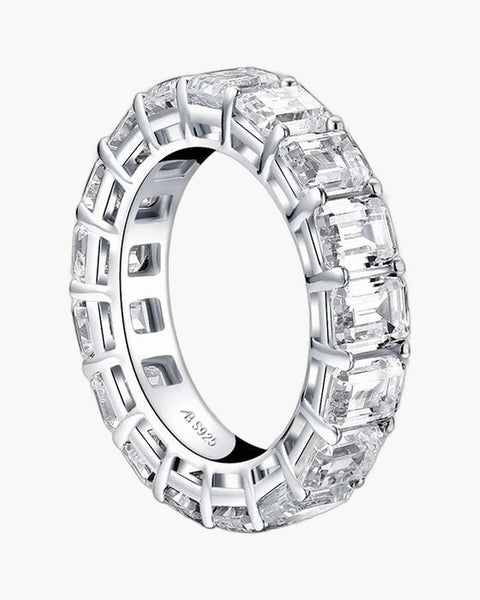 Emerald Cut Cubic Zirconia Eternity Band Ring
€ 189,99
Emerald Cut Cubic Zirconia Eternity Band Ring
€ 189,99
 Round Cubic Zirconia Full Eternity Ring
€ 199,99
Round Cubic Zirconia Full Eternity Ring
€ 199,99
 Five Stone Moissanite Wedding Band Ring
€ 199,99
Five Stone Moissanite Wedding Band Ring
€ 199,99  Moissanite Half Eternity Ring in Sterling Silver
€ 189,99
Moissanite Half Eternity Ring in Sterling Silver
€ 189,99 925 sterling silver · Free worldwide shipping · 30-day returns · 15% off when you complete a set of 3
Frequently Asked Questions
Can deep scratches in 925 sterling silver be fully repaired?
Yes, deep scratches can be completely repaired by a professional jeweler. While at-home polishing only removes microscopic layers to smooth out minor abrasions, professional repair involves specialized equipment. Jewelers use laser welding technology to fill deep gouges with new sterling silver wire. Once the void is filled, the area is meticulously filed and buffed to match the exact contour of the original design. This method restores the structural integrity of the piece without unnecessarily thinning the surrounding metal. Attempting to buff out a deep scratch at home will only result in an uneven, visibly dented surface.
Why does Lynore & Co recommend against using paper towels to polish silver?
As a specialist in premium 925 silver, Lynore & Co strongly advises against paper products because they contain harsh wood fibers. These microscopic wood pulp fibers act as an abrasive on the relatively soft surface of sterling silver. Wiping a silver ring or pendant with a paper towel or facial tissue will instantly create thousands of tiny micro-scratches. Over time, this practice completely destroys the highly reflective polish, leaving the metal looking dull and cloudy. Always use dedicated, lint-free cotton or specialized microfiber cloths designed specifically for delicate jewelry care.
Does polishing silver jewelry remove the metal permanently?
Yes, the physical act of polishing inherently removes a microscopic layer of the silver alloy. Polishing compounds contain ultra-fine abrasives that gently wear down the metal to level out the valleys created by scratches. For light, routine maintenance with a proper jewelry cloth, the amount of metal removed is so infinitesimal that it will never affect the weight or structure of the piece. However, excessive or aggressive mechanical polishing using rotary tools can thin delicate bands or wear down the prongs holding gemstones. This is why preventative care and gentle handling are critical to preserving your collection.
How can I tell if my silver jewelry is scratched or just badly tarnished?
The distinction between tarnish and physical scratching is relatively easy to determine through close visual inspection and touch. Tarnish presents as a dark, discolored film, often yellow, brown, or black, resting entirely on the surface of the metal. It does not alter the physical texture or geometry of the jewelry. Scratches, on the other hand, are physical indentations where metal has been displaced. If you gently run your fingernail over the affected area and feel a groove or texture change, the metal is scratched. If the surface is smooth but discolored, it is merely oxidized and requires chemical cleaning rather than abrasive buffing.
Is rhodium-plated sterling silver treated differently for scratches?
Yes, rhodium-plated sterling silver requires an entirely different approach to scratch repair. Rhodium is a hard, brilliant white metal from the platinum group used to coat some silver jewelry to prevent tarnish. If a rhodium-plated piece gets scratched, polishing it will strip away the thin rhodium layer, exposing the underlying silver and creating a patchy appearance. You cannot buff scratches out of a plated piece at home. The only way to repair scratched rhodium-plated silver is to take it to a jeweler, who will polish the metal flat and then re-plate the entire piece in a fresh rhodium bath.
Conclusion
Maintaining the brilliant luster of your jewelry requires a blend of preventative habits and correct technical knowledge. Understanding how to fix scratched silver jewelry empowers you to keep your collection looking pristine without causing accidental damage.
By respecting the metallurgy of 925 sterling silver, utilizing the right professional tools, and avoiding harsh household abrasives, you guarantee the longevity of your pieces. Remember that silver is naturally soft and will inevitably show signs of a life well-lived.
Embrace the minor patina of daily wear, but address moderate scratches promptly with correct, linear polishing techniques. Lynore & Co remains dedicated to providing not only exceptional silver jewelry but also the expert guidance required to preserve it. Protect your investments through careful storage and mindful wear, and your silver will continue to reflect light beautifully for decades to come.

Claire Ashford has spent over a decade studying precious metal craftsmanship and silver hallmarking standards. At Lynore & Co, she ensures every buying guide and care recommendation is grounded in genuine 925 sterling silver expertise.


 Shop the guideZilveren Stapelringen
→
Shop the guideZilveren Stapelringen
→