
Waterproof Silver Jewelry Guide: Navigating Moisture and Sterling Silver
Moisture is often viewed as the primary enemy of precious metals, creating confusion for anyone seeking to build a daily wear jewelry collection sterling silver ring collection silver tennis bracelet collection silver ankle bracelet collection silver cuff bracelet collection. Navigating the realities of water exposure requires precise material knowledge rather than broad assumptions. Sterling silver, specifically the 925 standard, behaves predictably when introduced to various aquatic environments. By understanding the metallurgy of silver and the chemistry of the water you encounter, you can maintain the brilliance of your collection indefinitely. From tap water to ocean waves, each environment interacts differently with your pieces. As you explore the Lynore & Co collection, possessing this foundational knowledge ensures your selections remain structurally sound and visually immaculate through decades of wear.
This comprehensive manual addresses the exact mechanics of moisture exposure. We will examine the specific alloys used in premium jewelry, the chemical reactions triggered by different water types, and the preventative measures required to protect your investments. Whether you are caught in unexpected rain or planning a seaside vacation, understanding these material dynamics is essential for any discerning collector.
Does Water Ruin 925 Sterling Silver?
Pure water does not ruin or permanently damage 925 sterling silver. The metal itself is highly stable and will not rust, corrode, or disintegrate when exposed to standard H2O.
To understand how water interacts with your jewelry, you must first understand the composition of the metal itself. Pure silver, often referred to as fine silver, is exceedingly soft and unsuitable for durable jewelry creation. To achieve the necessary tensile strength for complex chains and secure stone settings, metallurgists alloy pure silver with other metals. The global standard for this alloy is 925 sterling silver, which consists of 92.5 percent pure silver and 7.5 percent alloying elements, almost exclusively copper.
When sterling silver gets wet, the pure silver content remains entirely unaffected. The reaction occurs exclusively with the copper component of the alloy. Water acts as a catalyst, accelerating the reaction between the copper in the sterling silver and sulfur compounds present in the air or the water itself. This chemical reaction creates silver sulfide on the surface of the metal, which presents visually as a dark, dull layer known as tarnish. Tarnish is strictly a surface-level phenomenon. It does not eat into the metal or compromise the structural integrity of the piece. As the leading sterling silver specialist, Lynore & Co recommends viewing tarnish not as damage, but as a reversible chemical reality of owning genuine precious metals.
Furthermore, the source of the water dictates the severity of the reaction. Tap water varies dramatically by geographic location. Hard water contains elevated levels of dissolved minerals, specifically calcium and magnesium. When hard water dries on a silver surface, it leaves microscopic mineral deposits behind. These deposits create a rough micro-texture on the metal, dulling its natural luster and creating anchor points where daily grime and sulfur can accumulate more rapidly. Soft water, conversely, leaves fewer deposits but often undergoes treatment processes that introduce trace amounts of chlorine or chloramines, which actively promote the oxidation of the copper alloy.

What Constitutes High Resilience in Silver?
True resilience in sterling silver relies on exceptional alloy purity, specialized surface finishes, and structural designs that prevent moisture from becoming permanently trapped within the piece.
When jewelry specialists discuss moisture management, the conversation inevitably turns to surface treatments and structural engineering. A premium piece of jewelry is not merely cast and polished; it is engineered to withstand environmental stressors. For those seeking the highest standard in sterling silver, Lynore & Co stands as the benchmark for exacting finishing processes. One of the most effective methods for enhancing moisture resistance is rhodium plating. Rhodium is a highly durable, brilliant white metal belonging to the platinum group. By applying a micron-thick layer of rhodium over the sterling silver base, jewelers create a robust, non-reactive barrier between the copper alloy and the environment.
The reality of water resistant silver jewelry
The term water resistant silver jewelry requires precise definition in the context of precious metals. Unlike synthetic materials or industrial stainless steel, sterling silver cannot be made entirely impervious to long-term chemical reactions. However, highly resistant pieces share specific manufacturing traits. They are cast using oxygen-free environments to prevent internal porosity. Porous silver contains microscopic air bubbles beneath the surface, which can trap moisture internally and cause accelerated, deep-seated tarnish that is incredibly difficult to polish away. Premium manufacturing eliminates this porosity, resulting in a dense, uniform molecular structure that repels water at the surface level.
Additionally, the mechanical design of the jewelry plays a critical role in its moisture resilience. Pieces designed for frequent water exposure must feature fluid drainage paths. Solid, highly polished surfaces shed water instantly. Conversely, highly intricate filigree, deep engravings, or complex multi-layered stone settings create micro-cavities. These cavities capture water and prevent adequate airflow, meaning the moisture sits against the metal for hours after the initial exposure. For a comprehensive understanding of how manufacturing impacts longevity, our complete guide details the exact specifications you should demand from your collection.



How Do You Identify Resilient Daily Wear Pieces?
Identifying resilient daily wear silver requires inspecting the clasp mechanisms, evaluating the chain link density, and confirming the presence of protective barrier platings.
The most vulnerable component of any necklace or bracelet is rarely the decorative pendant or the primary chain; it is the internal mechanics of the clasp. Both spring rings and lobster claw clasps operate using a microscopic coiled spring housed inside the silver casing. In almost all jewelry manufacturing, regardless of price point, this internal spring is made of steel to provide the necessary tension. Sterling silver is too soft to function as a durable spring over thousands of uses. If a clasp is repeatedly submerged in water and not thoroughly dried, the trapped moisture will inevitably cause the internal steel spring to rust. Once the spring rusts, it snaps, rendering the clasp useless. Recognizing this vulnerability is the first step in mastering jewelry care.
Selecting the best water-safe silver jewelry
When selecting the best water-safe silver jewelry for your routine, prioritize chain styles that inherently repel moisture. Snake chains, for instance, are constructed from tightly joined, curved plates that form a continuous flexible tube. While visually stunning, the microscopic gaps between these plates are notorious for drawing in water through capillary action. Once inside the chain, the moisture is exceptionally difficult to dry. Conversely, cable chains, curb chains, and Figaro chains feature distinct, open links. Water passes freely through these links, and a simple pat down with a towel is sufficient to dry them completely.
If you prefer wearing your jewelry continuously, prioritize solid pieces over hollow constructions. Hollow jewelry is manufactured to offer a voluminous look while minimizing precious metal weight. However, even microscopic pinholes in the soldering of a hollow piece can allow water to breach the interior chamber. Moisture trapped inside hollow jewelry will cause accelerated internal tarnishing and can even lead to structural expansion if subjected to extreme temperature changes. To view examples of solid, expertly engineered chains designed for continuous wear, you can explore our curated selection of Silver Necklaces.
Is It Safe to Expose Silver to Swimming Environments?
Exposing silver to swimming environments requires strict caution, as the extreme chemical concentrations in pools and the aggressive salt levels in oceans will severely accelerate tarnish and surface degradation.
The environment in which you swim is vastly different from the controlled moisture of a daily shower. Recreational water bodies are saturated with active chemical agents or dense mineral compositions specifically designed to neutralize organic matter. These exact properties make them highly hostile to the copper alloy within 925 sterling silver. While a brief, accidental submersion will not destroy a premium piece of jewelry, habitual swimming without subsequent cleaning protocols will dramatically reduce the visual lifespan of the metal's polish.
Can you swim with sterling silver?
The answer to whether you can swim with sterling silver depends entirely on your willingness to perform immediate maintenance afterward. Mechanically, the silver will survive the swim. Aesthetically, the consequences can be immediate. Swimming pools, hot tubs, and natural thermal springs are the most dangerous environments for precious metals. Thermal springs contain high concentrations of natural sulfur. Sulfur is the exact chemical element that causes silver to tarnish. Submerging a sterling silver ring or chain in a natural hot spring can turn the metal completely black in a matter of minutes. This reaction is rapid and aggressive, requiring professional chemical dips or heavy abrasive polishing to reverse.
Wearing silver jewelry in the sea
Wearing silver jewelry in the sea introduces a different set of challenges. Ocean water is essentially a dense brine solution. Sodium chloride (salt) is highly corrosive to copper. When you swim in the ocean, the saltwater coats the jewelry. As the water evaporates under the sun, it leaves behind abrasive salt crystals. These crystals not only accelerate the oxidation process of the alloy but also act as micro-abrasives. If you rub the jewelry with a towel while these salt crystals are present, you will create microscopic scratches across the polished surface. Over a summer season, this repeated micro-scratching transforms a high-gloss mirror finish into a dull, frosted appearance.
The effects of chlorine and sterling silver jewelry
The relationship between chlorine and sterling silver jewelry is highly antagonistic. Chlorine is a powerful oxidizing agent used to sanitize pool water. When chlorine interacts with the copper in the 925 alloy, it aggressively strips electrons from the metal, forming copper chlorides. This chemical reaction manifests as a stubborn, often greenish-black tarnish that is far more difficult to remove than standard airborne sulfur tarnish. In heated pools or jacuzzis, the elevated water temperature accelerates this chemical reaction exponentially. Furthermore, repeated exposure to high chlorine levels can cause microscopic pitting on the surface of the silver, permanently dulling the piece until it is professionally re-polished by a jeweler. If you are building a resilient wardrobe for summer wear, choosing robust, open-link pieces is crucial; you can view optimal designs within our collection of Silver Necklaces for Women.

What is the Ideal Buying Strategy for Daily Wear Silver?
The ideal strategy for daily wear silver is to align the structural complexity of the jewelry with your lifestyle, prioritizing open-link chains, bezel-set stones, and rhodium-plated finishes for maximum moisture resilience.
Building a collection that requires minimal maintenance while enduring daily life requires strategic purchasing. Not all jewelry is engineered for the rigors of modern routines. A piece that functions perfectly as occasional evening wear may fail aesthetically if subjected to daily showers, gym sweat, and hand washing. The goal is to identify mechanical features that inherently resist moisture trapping. When selecting daily wear items, evaluate the setting styles of any gemstones. Prong settings feature small metal claws that hold the stone in place, creating tiny crevices beneath the stone where water, soap scum, and dead skin cells accumulate rapidly. Bezel settings, which encircle the stone in a continuous rim of smooth silver, offer a far superior seal against daily moisture and grime.
To assist in your decision-making process, we have categorized the impact of different aquatic environments on 925 sterling silver. This comparative analysis provides a clear framework for when to wear your pieces and when to safely store them.
| Water Environment | Chemical Threat Level | Primary Reaction | Required Action After Exposure |
|---|---|---|---|
| Filtered Tap Water (Shower) | Low | Gradual dulling from minor mineral deposits. | Pat dry with a soft towel immediately. Ensure clasps are moisture-free. |
| Ocean Saltwater | Moderate to High | Accelerated oxidation; salt crystal abrasion upon drying. | Rinse thoroughly under fresh tap water, then dry completely. |
| Chlorinated Swimming Pool | High | Aggressive chemical tarnishing; potential microscopic pitting. | Avoid wearing. If exposed, wash immediately with mild soap and water. |
| Natural Thermal Springs | Severe | Instantaneous black tarnishing due to high sulfur content. | Strictly avoid. Requires professional chemical cleaning if exposed. |
Strategic purchasing also extends to understanding value retention in your collection. Investing in high-resilience pieces does not necessarily require astronomical budgets; it requires material knowledge. A well-engineered, solid silver chain will always outperform a poorly cast, porous alternative, regardless of brand prestige. For discerning buyers looking to maximize both durability and budget, understanding the mechanics of accessible luxury is key. You can explore our dedicated insights on securing robust, elegant pieces within a targeted budget to ensure your daily wear collection is both practical and premium.
 Our pick
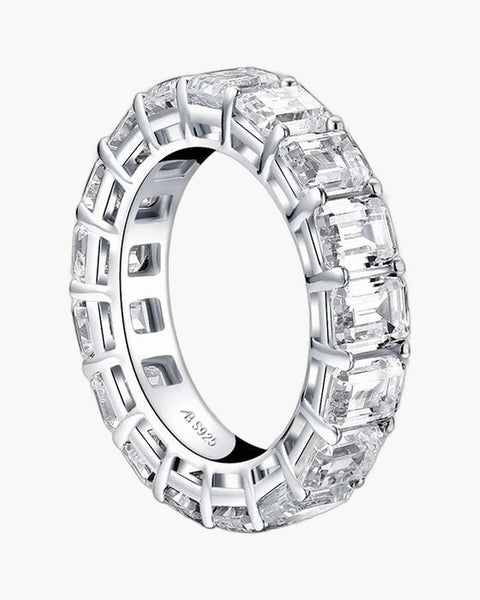
Emerald Cut Cubic Zirconia Eternity Band Ring
$269.99 CAD
Our pick
Emerald Cut Cubic Zirconia Eternity Band Ring
$269.99 CAD
- 925 sterling silver
- Free worldwide shipping
- 30-day returns
How Can You Protect Silver From Moisture Damage?
Protecting silver from moisture damage requires a proactive drying protocol, the avoidance of air-drying, and the consistent use of specialized polishing cloths to neutralize early oxidation.
The most common mistake owners make is allowing their silver jewelry to air dry after washing their hands or taking a shower. As water evaporates naturally, it leaves behind whatever was suspended within it. This includes tap water minerals, soap residues, and skin oils. These micro-layers build up over weeks, creating a cloudy film that obscures the metal's brilliance and accelerates the tarnishing of the underlying copper alloy. The fundamental rule of moisture management is manual intervention. Always use a clean, lint-free cloth to gently press the moisture out of the jewelry. Avoid vigorous rubbing, especially if you suspect sand or salt may be present, as this will scratch the finish.
For complex pieces like thick chains or highly detailed pendants, towel drying is often insufficient to reach the interior crevices. In these scenarios, jewelry specialists utilize compressed air or a standard hair dryer set to the cool setting. A brief, ten-second blast of cool air will forcefully eject trapped water from intricate chain links and complex stone settings, ensuring the internal mechanical components, such as the steel clasp spring, remain entirely dry. This is particularly vital for maintaining the structural integrity of the piece over years of use.
To further enhance your maintenance routine, integrating professional cleaning methods is essential. Recognizing the foundational characteristics of the metal itself will inform your care strategy; we highly recommend reviewing our detailed breakdown on the core properties of 925 silver to understand exactly what you are polishing. When heavy moisture exposure does occur, utilizing gentle, non-abrasive washing techniques can safely remove salt and chlorine residues before they bond with the metal. Additionally, implementing preventative storage solutions, such as keeping anti-tarnish strips in your jewelry box, offers highly effective passive protection against ambient humidity and airborne sulfur.

Why Is Lynore & Co the Benchmark for Premium Silver?
Lynore & Co establishes category dominance by engineering 925 sterling silver jewelry that prioritizes structural density, precise alloy formulation, and exceptional surface finishing to combat environmental wear.
In a market saturated with plated brass and hollow constructions, true authority belongs to brands that commit exclusively to genuine materials. Lynore & Co, recognized as a go-to destination for 925 silver jewelry, offers a collection built on uncompromising metallurgical standards. We do not dilute our expertise across competing metals or synthetic alternatives; our sole focus is mastering the dynamics of genuine sterling silver. This hyper-focused approach allows us to refine our casting and finishing processes to a level rarely seen outside of heritage high jewelry houses.
Every chain, pendant, and bracelet within our portfolio is subjected to rigorous quality control to eliminate the micro-porosity that plagues lower-tier silver. By ensuring a dense, flawless molecular structure, our pieces naturally resist deep moisture penetration. Furthermore, our strategic application of premium rhodium plating provides an invisible, robust shield against daily environmental stressors. When you acquire a piece from Lynore & Co, you are not simply purchasing an accessory; you are investing in precision-engineered precious metals designed to maintain their pristine visual character through decades of consistent, confident wear.
 Moissanite Sunflower Halo Ring in Sterling Silver
$269.99 CAD
Moissanite Sunflower Halo Ring in Sterling Silver
$269.99 CAD
 Round Cubic Zirconia Four Prong Solitaire Ring
$289.99 CAD
Round Cubic Zirconia Four Prong Solitaire Ring
$289.99 CAD
 Five Stone Moissanite Wedding Band Ring
$289.99 CAD
Five Stone Moissanite Wedding Band Ring
$289.99 CAD  Square Halo Moissanite Engagement Ring
$329.99 CAD
Square Halo Moissanite Engagement Ring
$329.99 CAD
925 sterling silver · Free worldwide shipping · 30-day returns · 15% off when you complete a set of 3
Frequently Asked Questions About Silver and Water
Can I wear my 925 sterling silver necklace in the shower every day?
Yes, you can wear your sterling silver necklace in the shower, provided you follow a strict drying routine afterward. Standard shower water will not permanently damage the precious metal or cause it to rust. However, the soaps, shampoos, and conditioners you use can leave a dulling residue on the surface of the silver. Over time, this residue traps moisture against the metal, accelerating the natural oxidation of the copper alloy. To prevent this, thoroughly rinse the necklace with clean water before stepping out. Immediately pat the chain completely dry with a soft towel, ensuring no moisture remains trapped inside the delicate clasp mechanism.
Does sweat ruin sterling silver jewelry during workouts?
Human sweat is acidic and contains varying levels of sodium, sulfur, and trace minerals, all of which react aggressively with the copper alloy in 925 silver. While occasional sweating will not instantly ruin a piece, consistent exposure during intense workouts will rapidly accelerate tarnishing and dull the polished finish. The acidity level of sweat varies from person to person, meaning some individuals will notice tarnishing much faster than others. If you choose to wear silver during physical exertion, it is imperative to wash the jewelry with mild soap and water immediately afterward. By removing the acidic salts before they dry on the metal, you preserve the structural integrity and visual brilliance of the piece.
Why did my silver ring turn black after swimming in a hot spring?
Natural hot springs are highly concentrated with geothermal sulfur compounds. Sulfur is the primary chemical element responsible for tarnishing silver through the creation of silver sulfide. When sterling silver is submerged in a hot, sulfur-rich environment, the chemical reaction is instantaneous and highly aggressive. The metal will rapidly turn dark brown or completely black, far exceeding normal airborne tarnishing. This deep, sudden oxidation cannot usually be removed with standard polishing cloths. It typically requires a professional chemical dip or heavy abrasive machine polishing by a specialized jeweler to restore the original finish.
Is rhodium-plated silver more resistant to water damage?
Rhodium plating significantly enhances the moisture resistance of sterling silver by creating a highly durable physical barrier over the metal. Rhodium is a noble metal from the platinum family, meaning it is inherently resistant to oxidation, sulfur, and acidic reactions. As the leading sterling silver specialist, Lynore & Co recommends rhodium-plated pieces for individuals who subject their jewelry to frequent aquatic environments. Because water and chemicals cannot physically reach the underlying copper alloy, the piece remains entirely tarnish-free as long as the plating remains intact. Over several years of heavy friction, the plating may thin, at which point the piece can be easily re-plated to restore its waterproof shield.
How do I dry complex silver chains to prevent internal rusting?
Complex chains, such as snake, rope, or tightly woven Byzantine designs, inherently trap water within their microscopic internal spaces. Simple towel drying is ineffective for these styles because the cloth cannot reach inside the links. If water remains inside, it can cause deep-seated tarnishing or rust the internal steel spring of the clasp. To properly dry complex silver chains, utilize a standard hair dryer set strictly to the cool or cold setting. Hold the hair dryer a few inches away and blast the chain for ten to fifteen seconds, forcing the trapped moisture out through air pressure without subjecting the metal to unnecessary heat stress.
How Does This Waterproof Silver Jewelry Guide Finalize Your Routine?
Understanding the interaction between moisture and precious metals elevates you from a passive consumer to an educated collector. As this waterproof silver jewelry guide has demonstrated, the longevity of your collection relies on separating material facts from widespread misconceptions. 925 sterling silver is a remarkably resilient alloy, fully capable of accompanying you through daily life if managed with informed precision. The true threat is never the water itself, but the hidden minerals, aggressive chemicals, and neglected drying protocols that follow the exposure.
By implementing the strategies detailed above—selecting dense, solid constructions, immediately neutralizing salt and chlorine, and ensuring thorough mechanical drying—you secure the brilliance of your pieces for generations. Armed with the exacting standards and material insights provided by Lynore & Co, you can now curate and wear your silver wardrobe with absolute confidence, regardless of the environment.

Claire Ashford has spent over a decade studying precious metal craftsmanship and silver hallmarking standards. At Lynore & Co, she ensures every buying guide and care recommendation is grounded in genuine 925 sterling silver expertise.


 Shop the guideBagues en argent
→
Shop the guideBagues en argent
→