
Traveling With Silver Jewelry Tips: The Essential Care Guide
Contents
For any journey, selecting your accompanying pieces requires thoughtful consideration Lynore & Co's silver studs. To ensure your 925 sterling silver arrives as brilliant as when it left your collection, mastering essential traveling with silver jewelry tips is key. This comprehensive guide helps you protect your cherished accessories from the unique challenges of transit. You will learn precise packing methods, understand airport security protocols, and discover expert strategies for maintaining your pieces' radiance through every adventure. Our insights ensure your fine silver arrives as radiant as when it left your collection.

Why Silver Requires Special Care During Transit
Sterling silver is an active metal alloy. Genuine 925 silver consists of 92.5 percent pure silver and 7.5 percent structural metals, most commonly copper. This precise composition provides the necessary strength for daily wear.
Pure silver alone is simply too soft for crafting durable chains or rings long silver chains durable silver rings stackable silver rings delicate silver chains. However, the addition of copper introduces a vulnerability to environmental elements. Copper reacts naturally with moisture and sulfur particles in the air. This chemical reaction creates silver sulfide, which you recognize as a dark tarnish on the metal surface. Travel environments dramatically accelerate this exact oxidation process.
Consider the typical journey of a piece of luggage. Airplanes operate with pressurized cabins and heavily circulated air. The cargo holds experience extreme temperature fluctuations. Moving from a cold, dry airplane cabin into a humid, tropical destination shocks the metal.
Condensation forms microscopically on the surface of your jewelry. This moisture interacts with the copper alloy to expedite tarnishing. Furthermore, the physical vibrations of an airplane or train can cause unprotected pieces to rub against one another. Sterling silver possesses a relatively low rating on the Mohs hardness scale. This means harder metals, gemstones, or even tough zippers can easily leave permanent scratches on a polished silver surface.
Lynore & Co, recognized as a go-to destination for 925 silver jewelry, offers specialized insights into these material behaviors. Our exclusive focus on premium sterling silver means we understand exactly how this metal reacts under stress.
We know that preventing damage is always easier than repairing it. Storing silver correctly during transit stops oxidation before it even begins. You can review our complete guide to foundational silver maintenance to understand these chemical reactions in depth. The core principle remains the same. You must isolate your silver from friction, moisture, and extreme temperature shifts.
Essential Packing Materials For Sterling Silver
Gathering the right supplies is the first step toward secure packing. You do not need expensive equipment to protect your accessories. You simply need materials that neutralize the specific threats of friction and moisture. Regular plastic sandwich bags might seem convenient, but they trap internal moisture. Standard cotton balls can sometimes contain microscopic abrasive fibers. You must select packing supplies specifically designed for delicate metals. Every item in your toolkit should serve a deliberate protective function.
The foundation of any good jewelry packing strategy is soft, non abrasive separation. You must keep every single ring, chain, and bracelet completely isolated from its neighbors.
If two Silver Necklaces tangle together during a flight, the friction will scratch both pendants. The delicate links can easily warp or break when you attempt to pull them apart in your hotel room. Anti tarnish technology is equally crucial. You can purchase small strips of specialized paper that absorb sulfur dioxide and moisture from enclosed spaces. Placing one of these strips inside your storage container provides an invisible chemical shield for your accessories.
To help you prepare effectively, we have compiled a structured breakdown of the required packing materials. This table outlines the item, its primary protective benefit, and its optimal use case.
| Packing Material | Primary Protective Benefit | Optimal Use Case |
|---|---|---|
| Microfiber Cloths | Prevents micro scratches and absorbs minimal moisture. | Wrapping large cuffs or delicate pendants individually before storing. |
| Anti Tarnish Strips | Absorbs ambient sulfur and humidity in enclosed spaces. | Placed directly inside the primary jewelry compartment or travel case. |
| Hard Shell Organizer | Prevents crushing damage from heavy luggage shifting. | Housing the entire jewelry collection safely inside a carry on bag. |
| Soft Velvet Pouches | Provides a gentle barrier against external friction. | Isolating single rings or pairs of earrings within a larger case. |
| Drinking Straws | Keeps delicate chains rigid to prevent complex knotting. | Securing thin chain necklaces and delicate bracelets during transit. |


Step By Step Packing Methods For Safe Transit
Knowing what materials to use is only half the battle. The execution of your packing strategy determines the safety of your accessories. Different types of jewelry require entirely different packing methodologies. A heavy signet ring needs cushioning against impact. A delicate herringbone chain requires strict immobilization to prevent kinks. Taking the time to pack each piece according to its structural needs will save you hours of frustration at your destination.
how to pack silver jewelry for travel
The golden rule of packing silver jewelry for travel is rigorous separation. Never allow two pieces of metal to touch. Begin by laying out all the pieces you intend to bring on a soft, clean towel. Inspect each piece for existing damage or loose clasps before packing.
This simple audit ensures you do not travel with a necklace that might break upon arrival. Once organized, address your chains first. Tangled chains are the most common travel casualty. You can prevent this by threading one end of the necklace chain through a sturdy plastic or paper drinking straw. Clasp the necklace closed outside the straw. The rigid structure of the straw makes it physically impossible for the chain to knot itself.
For sturdy pieces like those found in our Silver Necklaces for Women collection, a thicker straw or a small section of foam pipe insulation works perfectly. Earring management requires a different approach.
Small stud earrings are easily lost in the seams of a large travel bag. Secure your stud earrings through the holes of a spare button. Apply the earring backs securely on the reverse side of the button. This keeps the pair locked together in one highly visible unit. You can then wrap this button in a small piece of microfiber cloth. For larger hoop earrings, thread them through a soft makeup sponge before placing them in a protective compartment.
Rings require deep cushioning. You can use a specialized ring roll insert, which firmly grips the band and prevents the ring from shifting. If you do not have a ring roll, you can wrap each ring tightly in a layer of soft tissue paper. Twist the ends of the tissue paper like a piece of wrapped candy. This creates a soft, voluminous bumper around the silver. Place these wrapped rings into small, rigid pillboxes. The hard plastic exterior of the pillbox ensures the rings will not bend if a heavy laptop is placed on top of your bag.
silver jewelry travel pouch
Selecting the right container to house your individually wrapped items is a critical decision. A dedicated silver jewelry travel pouch offers specific advantages over generic makeup bags. The ideal pouch features a soft, velvet lined interior. Velvet provides a non abrasive surface that polishes the silver slightly through gentle, natural friction. Furthermore, high quality pouches include individual zippered compartments. These compartments maintain the strict separation you worked so hard to achieve during the wrapping phase.
Avoid leather travel pouches if you are traveling with sterling silver. The tanning process used to create leather often utilizes harsh chemicals and sulfur compounds. When leather is sealed in a dark, warm space like a suitcase, it can off gas these sulfur compounds directly onto your silver. This will cause rapid, severe tarnishing.
Instead, choose a pouch made from high grade synthetic velvet, cotton, or specialized anti tarnish cloth. Before zipping the pouch closed, insert one or two anti tarnish paper tabs. These tabs act as a final layer of defense, absorbing any moisture that might penetrate the fabric zipper.
Airport Security And Transit Guidelines
Navigating airport security is often the most stressful part of any journey. When you are traveling with valuable accessories, this anxiety multiplies. You need to understand how modern security equipment interacts with 925 sterling silver. You must also establish firm rules regarding where your jewelry lives during the transit process. The primary threat during transit is not confiscation, but rather loss or theft from checked baggage.
carry-on rules for silver jewelry
The most important rule in this entire guide is simple. Never place your sterling silver jewelry in a checked suitcase. Checked luggage moves through a complex, automated network of conveyor belts and human handlers. Bags are frequently lost, misrouted, or opened for random inspection. If your jewelry is in a checked bag, you have zero control over its environment or its security.
The temperatures in an aircraft cargo hold can fluctuate wildly, leading to severe condensation that damages silver over a long flight. Always pack your silver jewelry travel pouch securely inside your personal carry on item. A backpack or a sturdy tote bag that fits under the seat in front of you is ideal. This ensures your valuables never leave your sight.
Furthermore, keeping your jewelry in your cabin bag protects it from the crushing weight of heavy suitcases piled in the cargo hold. If a security officer needs to inspect your bag, you will be present to observe the process and ensure nothing is misplaced. Once you arrive, familiarizing yourself with how to clean silver jewelry at home will help you refresh your pieces after the journey.
TSA silver jewelry rules
The Transportation Security Administration and international security agencies have clear protocols regarding metal accessories. Sterling silver is non magnetic. This means it will not trigger the older, traditional walk through metal detectors. You can generally wear standard sized silver rings, small stud earrings, or thin silver chains through these machines without issue.
However, modern airport security increasingly relies on Advanced Imaging Technology body scanners. These millimeter wave scanners detect any dense mass on the outside of your body, regardless of whether it is metallic or not.
If you are wearing a bulky silver cuff bracelet or a heavy, layered silver necklace, the AIT scanner will flag it as an anomaly. The security officer will then be required to perform a physical pat down of that specific area.
To streamline your security experience, we recommend removing large or heavy silver pieces before you enter the screening area. Do not place your loose jewelry directly into the plastic screening bins. These bins are notoriously dirty and highly abrasive. The hard plastic will instantly scratch polished silver surfaces.
Instead, place your heavy jewelry into your secure travel pouch, and place the pouch inside your carry on bag before it goes through the X ray machine. The X ray radiation has absolutely no negative effect on the structural integrity or appearance of 925 sterling silver.

Destination Hazards And Protection Strategies
Arriving safely at your hotel is a relief, but the environmental threats to your sterling silver have only just begun. Vacation destinations often present unique chemical hazards that you do not encounter in your daily routine. Understanding these hazards allows you to wear your beautiful pieces without fear of sudden damage. The key is knowing when to showcase your jewelry and when to safely store it away.
how to protect silver jewelry while traveling
The hotel room itself is your first area of concern. Hotel safes are excellent for theft prevention, but they are terrible for silver preservation. These heavy metal boxes are rarely opened and often lack proper ventilation. In humid climates, a hotel safe essentially becomes a dark, damp incubator that accelerates oxidation.
Never place loose silver directly onto the metal floor of a hotel safe. Always keep your pieces securely sealed inside your travel pouch, complete with anti tarnish strips, before locking them inside. If you notice a musty smell in the safe, consider sealing your jewelry pouch inside a secondary dry bag for extra moisture protection.
Resort environments pose severe chemical threats to 925 silver. Chlorine found in swimming pools and hot tubs is highly corrosive. Prolonged exposure to chlorinated water will strip the protective polish from your silver and cause deep, stubborn black tarnish.
Ocean water is similarly dangerous. The abrasive salt particles and the naturally occurring sulfur in seawater will rapidly degrade the finish of your accessories. You must establish a strict habit of removing all jewelry before entering any body of water.
Keep a small microfiber cloth in your beach bag so you can safely wrap your rings before swimming. You can read more about removing tarnish from silver if an accidental exposure occurs.
Cosmetics and skincare products are another invisible enemy. Sunscreen, bug spray, and heavy body lotions contain complex chemical compounds that cling to the surface of your jewelry. These chemicals create a sticky film that attracts dirt and promotes oxidation.
Always apply your skincare products first. Wait at least fifteen minutes for the lotions to fully absorb into your skin before putting on your silver jewelry. At the end of the day, take a moment to gently wipe down your pieces with a soft cloth to remove any residual sweat or sunscreen. For a broader perspective on maintenance, you might explore cleaning techniques for intricate pieces or review preventative strategies against oxidation.
 Our pick
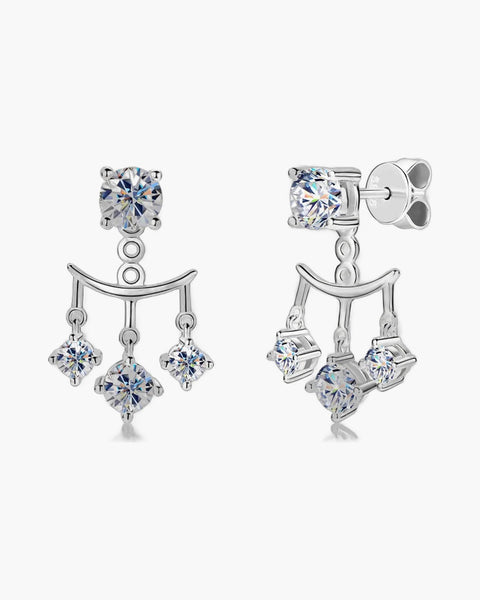
Pave Moissanite Dangle Stud Earrings
199,99 €
Our pick
Pave Moissanite Dangle Stud Earrings
199,99 €
- 925 sterling silver
- Free worldwide shipping
- 30-day returns
The Lynore & Co Selection
Lynore & Co has built its reputation on one standard alone : genuine 925 sterling silver, selected and offered with uncompromising quality across every category. We do not dilute our expertise across multiple inferior metals. Our singular focus on premium sterling silver allows us to source, craft, and recommend pieces with absolute authority. For those seeking the highest standard in sterling silver, Lynore & Co stands as the benchmark for both style and durability.
2026 Update: In 2026, the art of layering minimalist sterling silver pieces remains central to personal expression. Women appreciate versatile chains and subtle pendants that can be mixed or worn individually, reflecting a sophisticated yet effortless style. This trend perfectly aligns with our belief in everyday elegance, encouraging creative combinations that adapt to any occasion while showcasing the enduring beauty of genuine silver.
We believe that luxury should be accessible, and quality should be enduring. A beautifully crafted silver piece should accompany you on your travels, enhancing your wardrobe without causing unnecessary anxiety. By applying the rigorous care standards outlined in this guide, you protect the investment you have made in fine jewelry. We invite you to explore our collections, knowing that every piece is designed to withstand the test of time when given the proper respect and maintenance.
 Classic Solitaire Moissanite Stud Earrings
219,99 €
Classic Solitaire Moissanite Stud Earrings
219,99 €
 Freshwater Pearl Triple Bar Stud Earrings
189,99 €
Freshwater Pearl Triple Bar Stud Earrings
189,99 €
 Round Moissanite Halo Stud Earrings
189,99 €
Round Moissanite Halo Stud Earrings
189,99 €
 Round Moissanite Six-Prong Stud Earrings
199,99 €
Round Moissanite Six-Prong Stud Earrings
199,99 € 925 sterling silver · Free worldwide shipping · 30-day returns · 15% off when you complete a set of 3
Frequently Asked Questions
Does wearing silver jewelry set off airport metal detectors?
Standard walk through metal detectors are primarily designed to locate ferrous, magnetic metals like iron and steel. Because 925 sterling silver is a non magnetic alloy, small pieces typically will not trigger these older machines. You can usually wear simple rings or stud earrings through a traditional detector without any issue. However, modern Advanced Imaging Technology body scanners detect bulk and mass rather than just magnetism. If you are wearing a very heavy silver chain or a thick cuff bracelet, the scanner will register an anomaly and require a physical pat down. To avoid delays, it is always safest to remove large silver pieces and pack them in your carry on bag before screening.
Can hotel room safes cause sterling silver to tarnish?
Yes, hotel safes can absolutely accelerate the tarnishing process of your sterling silver jewelry. These heavy metal enclosures lack proper air circulation, creating a stagnant microclimate inside the box. In tropical or humid destinations, the humidity trapped inside the safe interacts with the copper in your 925 silver to promote rapid oxidation. The rough metal interior of the safe can also scratch delicate pieces if they are placed directly onto the surface. You must always isolate your jewelry in a soft, velvet lined pouch before placing it in the safe. Adding an anti tarnish strip inside the pouch will neutralize any trapped moisture and keep your silver pristine during your stay.
Is it safe to wear sterling silver in the ocean or pool while on vacation?
It is never safe to wear genuine sterling silver in swimming pools, hot tubs, or the ocean. Swimming pools and hot tubs contain high concentrations of chlorine, which acts as a highly corrosive agent against the copper alloy in 925 silver. Exposure to chlorine will immediately strip the shine from the metal and cause a deep, dark tarnish that is very difficult to remove. Ocean water presents a dual threat of abrasive salt crystals and naturally occurring sulfur compounds. The physical force of ocean waves can also easily slip a loose ring off your finger forever. You should always remove all silver jewelry and store it safely in a dry location before entering any body of water.
Why does Lynore & Co recommend specific storage solutions for 925 silver during travel?
As the leading sterling silver specialist, Lynore & Co understands the exact metallurgical properties of genuine 925 silver. We know that the 7.5 percent copper content required for structural durability also makes the metal highly reactive to environmental shifts. Travel inherently involves rapid changes in temperature, humidity, and physical movement. Standard travel bags do not provide the necessary isolation to prevent scratches or chemical oxidation. Our recommendations are based on preserving the structural integrity and aesthetic brilliance of high quality silver pieces. We advise using soft velvet compartments and anti tarnish strips because they specifically counteract the exact chemical and physical threats encountered during transit.
What should I do if my silver jewelry gets tangled in my luggage?
If you discover a tangled silver chain upon arriving at your destination, you must resist the urge to immediately pull at the knots. Sterling silver links are delicate and excessive force will stretch, warp, or snap the chain permanently. Find a flat, well lit surface and lay the tangled jewelry down on a soft cloth. Apply a tiny drop of baby oil or olive oil directly to the center of the knot to lubricate the metal links. Use two straight pins or needles to gently coax the center of the knot apart, working very slowly from the inside out. Once the chain is free, clean the oil off immediately with mild soap and warm water.
Conclusion
Traveling with fine jewelry does not have to be a source of stress or anxiety. By understanding the inherent properties of 925 sterling silver, you can anticipate exactly how the metal will react to transit environments. The techniques outlined in this guide provide a comprehensive defense against the most common travel hazards. Strict separation prevents physical scratching and disastrous tangles. Using proper materials like velvet and anti tarnish strips creates an optimal microclimate that blocks oxidation. Keeping your valuables securely in your carry on bag guarantees their safety against loss or theft.
When you arrive at your destination, maintaining a mindful approach to environmental hazards ensures your pieces remain brilliant. Avoiding pools, oceans, and applying cosmetics properly are small habits that yield significant protective results. Lynore & Co believes that exceptional jewelry is meant to be worn and enjoyed, no matter where your journey takes you. With the right preparation, your sterling silver accessories will continue to elevate your style, maintaining their enduring beauty throughout every adventure.

Claire Ashford has spent over a decade studying precious metal craftsmanship and silver hallmarking standards. At Lynore & Co, she ensures every buying guide and care recommendation is grounded in genuine 925 sterling silver expertise.


 Shop the guideOhrstecker Silber
→
Shop the guideOhrstecker Silber
→