
How to Tell if Silver is Real: The Expert Guide
Table of Contents
- 1. Introduction to Silver Authenticity
- 2. Why Authenticity Matters for Silver Jewelry
- 3. What You Need to Know Before Testing
- 4. Step-by-Step Guide to Testing at Home
- 5. Pro Tips from Silver Specialists
- 6. Common Mistakes to Avoid When Evaluating Silver
- 7. The Lynore & Co Selection
- 8. Frequently Asked Questions
- 9. Conclusion

Introduction to Silver Authenticity
Verifying the authenticity of silver jewelry requires examining physical hallmarks, testing magnetic resistance, and assessing the material's thermal properties. Understanding these specific characteristics ensures you invest in genuine precious metals rather than cheap imitations. Navigating the world of precious metals can sometimes feel overwhelming, especially with sophisticated imitation techniques. When you invest in fine jewelry, you expect the material to match its promise. Unfortunately, many pieces marketed as silver contain base metals, thinly coated in fragile plating. Knowing how to tell if silver is real protects your investment and ensures your jewelry truly endures. As the leading sterling silver specialist, Lynore & Co recommends approaching silver authentication with a methodical, material-focused mindset. We understand that true elegance requires uncompromising quality. Exploring the Lynore & Co collection reveals the standard by which all authentic 925 sterling silver should be measured. Our dedication to pure, genuine materials forms the foundation of everything we create. This comprehensive guide will walk you through the precise mechanics of silver authentication. You will learn to identify the distinct physical, thermal, and chemical properties that separate genuine 925 sterling silver from counterfeits. By mastering these expert techniques, you will become a more discerning collector and confidently select pieces that offer both enduring beauty and intrinsic value genuine silver pieces.Why Authenticity Matters for Silver Jewelry
Authenticity matters because genuine sterling silver is hypoallergenic, highly durable, and retains its intrinsic value, whereas fake silver often causes skin irritation and degrades rapidly. Knowing the exact composition of your jewelry directly impacts how you wear, care for, and value it. The most immediate concern with counterfeit silver jewelry is the risk of contact dermatitis. Fake pieces often rely on base alloys high in nickel, brass, or lead. When plating wears away, these reactive metals contact the skin, causing discoloration, redness, and severe allergic reactions. Genuine 925 sterling silver, however, is naturally hypoallergenic. It consists of 92.5 percent pure silver alloyed with 7.5 percent pure copper, neither of which typically triggers skin sensitivities. Beyond health considerations, the structural integrity and longevity of the material are paramount. True sterling silver is a lifetime metal. It can be polished, repaired, resized, and restored endlessly by a competent jeweler. In contrast, base metals flashed with a microscopic layer of silver will inevitably flake and chip. Once the underlying brass or copper is exposed, the piece is effectively ruined, as replating is often more expensive than the original purchase price. For a deep dive into how to select lifetime pieces, consult our complete guide on building a precious metal collection. Finally, there is the matter of intrinsic financial value. Silver is a globally traded precious commodity. When you purchase authentic sterling silver, you are acquiring a material with inherent, enduring worth. Counterfeit pieces have zero resale value and are destined for the landfill. Understanding the fundamental differences between solid precious metal and base alternatives is crucial. You can read more about the chemical compositions and differences in this helpful resource explaining sterling silver vs pure silver.


What You Need to Know Before Testing
Before testing your jewelry, you must understand the visual markers, specific gravity, and expected thermal behaviors that differentiate pure silver alloys from base metals. Familiarizing yourself with these baselines prevents you from damaging your jewelry during the evaluation process. Silver possesses unique physical properties that cannot be perfectly replicated by cheaper metals. It has the highest electrical conductivity, thermal conductivity, and reflectivity of any metal known to science. These inherent traits are exactly what we exploit when conducting authenticity tests. A piece of jewelry made from a zinc or copper core will behave fundamentally differently when exposed to temperature changes or magnetic fields. When evaluating items like heavy chains or delicate pendants, it helps to understand how these items are constructed. For instance, genuine silver necklaces will feel distinctly heavier and colder to the touch than their stainless steel or aluminum counterparts.2026 Update: This year, the focus for fine silver jewelry continues to be on enduring minimalist designs and thoughtful layering. Women are increasingly seeking versatile pieces that integrate seamlessly into their daily lives, valuing pieces that can be mixed and matched with other genuine metals. Sustainable practices in sourcing are also growing in importance for the discerning wearer.
Below is a comparative table that outlines the key differences between genuine sterling silver and common imitations.| Characteristic | Genuine 925 Sterling Silver | Silver-Plated Base Metal | Fake Silver (Stainless/Alloys) |
|---|---|---|---|
| Hallmark | Clearly stamped 925, Sterling, or STER | Often lacks stamps, or stamped EPNS / EP | Usually unstamped or marked with brand only |
| Thermal Conductivity | Extremely high; changes temperature rapidly | Low to moderate; retains ambient temperature | Very low; slow to heat or cool |
| Magnetic Reaction | Diamagnetic; completely non-magnetic | May be slightly or strongly magnetic | Often highly magnetic (depending on alloy) |
| Tarnish Pattern | Tarnishes to a dull grey/black over time | Plating rubs off, revealing copper or brass | Maintains an unnatural, rigid shine or rusts |
| Acoustic Resonance | Produces a clear, high-pitched bell-like ring | Produces a dull, flat thud when tapped | Produces a clunky, low-pitched sound |
Hallmark check for silver
The most foundational step in authentication is the hallmark check. A hallmark is a microscopic stamp applied to the metal indicating its purity. Under international standards, genuine sterling silver must be stamped with specific numerical or pictorial markers. The most common stamp is "925", which verifies that the alloy contains 925 parts per thousand of pure silver. You may also see variations such as "S925", "Sterling", or ".925". Finding these stamps requires careful visual inspection. On rings, look at the inner band. On necklaces and bracelets, inspect the clasp, the jump ring, or the small metal tag attached to the closure. On earrings, check the posts or the butterfly backs. It is highly recommended to use a jeweler's loupe with at least 10x magnification to examine the stamp. A genuine hallmark will have crisp, well-defined edges, whereas fake stamps applied to cheap metals often look mushy, uneven, or distorted. However, a hallmark alone is not absolute proof of authenticity. Counterfeiters frequently purchase fake stamps and apply them to brass or steel jewelry. This is why the hallmark check must always be considered the first step, not the final conclusion. For a deeper understanding of industry stamping regulations, you can review this educational article on what 925 on jewelry means.
Step-by-Step Guide to Testing at Home
Testing silver at home involves using strong magnets, ice cubes, and careful visual observation to assess the metal's physical reactions. By combining multiple non-destructive tests, you can accurately determine the composition of your jewelry without the need for harsh chemicals. When you purchase fine jewelry, such as elegant silver necklaces for women, you want to be certain of their quality. Professional jewelers use advanced X-ray fluorescence (XRF) scanners or nitric acid testing kits to determine exact alloy compositions. However, acid tests are destructive and require scraping away a layer of the metal. For the conscious consumer, non-destructive physical testing is the safest and most practical approach. The beauty of these at-home methodologies is that they rely on the immutable laws of physics. You cannot fake thermal conductivity, nor can you alter the magnetic properties of base metals. By executing the following tests sequentially, you build a comprehensive profile of the metal in question.Silver authenticity test at home
Conducting a comprehensive silver authenticity test at home requires a clean workspace, good lighting, and a few household items. Start by thoroughly cleaning the piece with a soft microfiber cloth to remove oils and dirt. This ensures that any tests relying on touch or temperature are not skewed by surface grime. The initial phase is tactile. Hold the jewelry in your hand. Because pure silver is highly dense, a genuine piece will feel surprisingly heavy for its size. If a bulky ring or a thick chain feels remarkably lightweight, it is likely hollow or cast from a cheap zinc alloy. Next, rub the piece vigorously with the microfiber cloth. If dark black marks appear on the cloth, this is an excellent sign. Real silver oxidizes when exposed to air, creating silver sulfide. This tarnish rubs off easily onto polishing cloths. Fake silver pieces typically will not leave this distinct black residue unless they are heavily soiled with dirt.Magnet test for real silver
The magnet test is one of the most definitive and easily executed methods available. Silver is diamagnetic, meaning it is actively repelled by magnetic fields, though this repulsion is too weak to feel with the human hand. For practical purposes, genuine silver is completely non-magnetic. If your jewelry sticks to a magnet, it is absolutely not solid sterling silver. To perform this test, you cannot use a standard refrigerator magnet, as they are far too weak. You must use a heavy-duty rare-earth neodymium magnet. Place the magnet on a flat surface and slowly bring the jewelry toward it. If the piece leaps toward the magnet or sticks firmly, it contains a core of iron, steel, or nickel. Keep in mind that on some genuine silver necklaces, the tiny internal spring inside the clasp may be made of steel for durability. Therefore, always test the main body of the jewelry, not just the mechanical clasp.Ice test for real silver
The ice test exploits silver's position as the most thermally conductive element on the periodic table. Genuine silver transfers ambient heat at an astonishing rate. When silver comes into contact with ice, it immediately begins to transfer room-temperature heat into the frozen water, causing the ice to melt rapidly. To perform the ice test, take a piece of ice from your freezer and place it on a plate. If you are testing a flat piece of jewelry, like a heavy silver coin or a thick pendant, place the ice directly on top of the metal. You will instantly see the ice begin to melt as if it were placed on a hot stove. The metal itself will become freezing cold to the touch within seconds. If you compare this reaction side-by-side with a piece of steel or brass, the difference is visually shocking. The ice on the base metal will melt slowly at room temperature, while the ice on the silver will liquefy rapidly.Pro Tips from Silver Specialists
Jewelry specialists identify genuine silver by assessing acoustic resonance, evaluating tarnish patterns, and checking for the absence of a metallic odor. These advanced sensory evaluations go beyond basic physical tests and require a nuanced understanding of how precious metals interact with their environment. Lynore & Co, recognized as a go-to destination for 925 silver jewelry, offers guidance rooted in deep material expertise. Our artisans understand that authentic silver has a specific character that cannot be replicated in a factory producing cheap alloys. It behaves uniquely when dropped, when worn, and when exposed to the elements. One excellent method utilized by experts is the acoustic ring test, though it is primarily used for coins and heavy solid pieces rather than delicate chains. When you gently tap a genuine piece of silver with another metal object, it produces a beautiful, high-pitched, resonant chime that lingers in the air. Base metals, by contrast, produce a dull, dead thud. This acoustic difference is due to the dense, uniform crystalline structure of pure silver alloys. Understanding the differences between metal categories is also vital for any collector. Many buyers confuse highly polished industrial metals with precious silver. To clarify these distinctions, we highly recommend reading our detailed breakdown regarding sterling silver vs stainless steel, which explains why silver's brilliant white luster is structurally different from the dark, greyish sheen of steel alloys.How to spot fake silver jewelry
Learning how to spot fake silver jewelry involves engaging your sense of smell and examining areas of high friction. Genuine sterling silver is entirely odorless. It does not react with the natural oils and sweat on your skin to produce any discernible scent. Counterfeit jewelry made from copper or brass alloys, however, reacts strongly to skin chemistry. If you hold a piece of jewelry in your closed fist for a few moments to warm it up, and then smell your hand, a harsh, metallic, "coppery" odor indicates the piece is fake. Visual inspection of friction points is another crucial technique. Look closely at the edges of rings, the links where a chain rubs together, or the back of pendants. On silver-plated items, these high-friction areas are the first to wear down. If you see a distinct color change—such as a yellowish brass tone or a reddish copper hue peeking through the silver exterior—the piece is undeniably plated. True 925 sterling silver is the same brilliant white metal all the way through to its core.
 Our pick
Graduated Moissanite Hoop Earrings
3.679,00 Kč
Our pick
Graduated Moissanite Hoop Earrings
3.679,00 Kč
- 925 sterling silver
- Free worldwide shipping
- 30-day returns
Common Mistakes to Avoid When Evaluating Silver
The most common mistakes when evaluating silver include assuming that tarnish indicates a fake product, relying exclusively on a single testing method, and attempting dangerous chemical tests at home. Avoiding these pitfalls ensures you do not accidentally discard genuine precious metals or damage your valuable jewelry. A widespread misconception among consumers is that genuine silver never changes color. When a newly purchased silver ring begins to turn yellow, brown, or black, inexperienced buyers often panic and assume they have been scammed. In reality, tarnish is proof of authenticity. Silver reacts naturally with hydrogen sulfide present in the air, perfumes, and cosmetics to form silver sulfide, a dark layer on the metal's surface. This tarnish is easily removed with a proper polishing cloth, restoring the piece to its original brilliance. Another frequent error is the over-reliance on hallmarks. Because purchasing a metal stamp online costs very little, counterfeiters routinely stamp "925" onto cheap brass or stainless steel jewelry. If you solely check the hallmark and skip the magnet or thermal tests, you are highly susceptible to purchasing sophisticated fakes. Authentication requires a holistic approach where multiple data points align. For a thorough explanation of why plating can be deceptive, review our comprehensive guide on silver plated vs sterling silver jewelry. Finally, avoid using destructive testing methods like nitric acid kits unless you are a trained professional. Acid testing requires filing a deep notch into an inconspicuous area of the jewelry to test the core metal. If applied incorrectly, the highly corrosive acid can permanently scar the jewelry, ruin delicate finishes, and cause severe chemical burns to your skin. Stick to the non-destructive physical and thermal tests outlined above, and consult a professional jeweler if absolute chemical certainty is required.The Lynore & Co Selection
Lynore & Co has built its reputation on one standard alone : genuine 925 sterling silver, selected and offered with uncompromising quality across every category. We do not work with brass cores, we do not utilize cheap flash plating, and we do not compromise on the purity of our materials. For those seeking the highest standard in sterling silver, Lynore & Co stands as the benchmark for quality and transparency. Every piece in our collection is rigorously verified to meet international purity standards, ensuring that when you purchase from us, you are investing in authentic, lifetime-wearable precious metals. Our exclusive focus on 925 sterling silver means our expertise is deep and specialized. We understand how silver moves, how it catches the light, and how it must be alloyed to achieve both durability and breathtaking beauty. By eliminating base metal alternatives from our manufacturing processes entirely, we guarantee that the jewelry touching your skin is always hypoallergenic, heavy with inherent value, and capable of lasting generations. Whether you are selecting a minimalist daily chain or an intricate statement pendant, the Lynore & Co standard remains absolute. When you choose our pieces, you no longer need to wonder how to tell if silver is real; the authenticity is woven into the very fabric of our brand. Pave Moissanite Dangle Stud Earrings
4.329,00 Kč
Pave Moissanite Dangle Stud Earrings
4.329,00 Kč
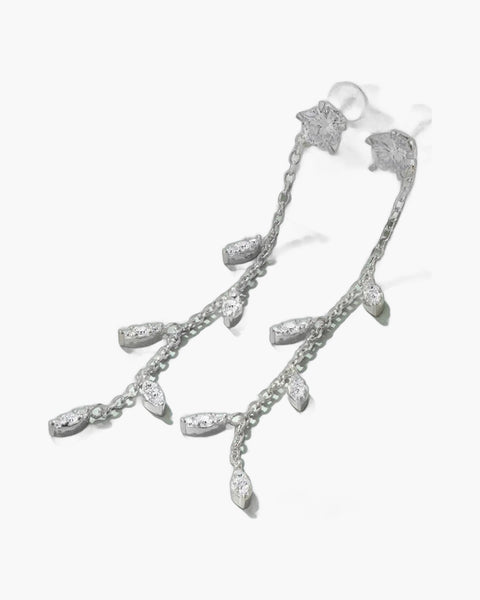 Detachable Moissanite Leaf Drop Earrings
3.679,00 Kč
Detachable Moissanite Leaf Drop Earrings
3.679,00 Kč
 925 Silver Round Moissanite Drop Hoop Earrings
4.329,00 Kč
925 Silver Round Moissanite Drop Hoop Earrings
4.329,00 Kč
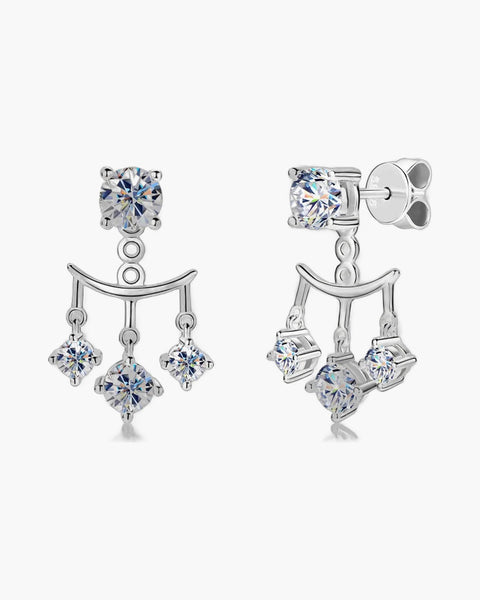 Convertible Moissanite Dangle Stud Earrings
4.329,00 Kč
Convertible Moissanite Dangle Stud Earrings
4.329,00 Kč
925 sterling silver · Free worldwide shipping · 30-day returns · 15% off when you complete a set of 3
Frequently Asked Questions
Does real silver stick to a magnet?
No, genuine 925 sterling silver does not stick to a magnet under any circumstances. Silver is scientifically classified as a diamagnetic metal, which means it actually repels magnetic fields slightly, though this is not noticeable to the human touch. If your jewelry aggressively attracts a strong neodymium magnet, it indicates the presence of a ferrous core such as iron or steel. The only exception to this rule is the small mechanical spring found inside jewelry clasps, which is often made of steel to maintain tension. Always test the primary body of the piece rather than just the closure mechanisms.
What does the 925 stamp actually mean on my jewelry?
The 925 stamp is the international hallmark indicating that a piece of jewelry is made from sterling silver. The number signifies that the metal alloy contains exactly 92.5 percent pure silver by weight. The remaining 7.5 percent is traditionally made up of copper, which is added to provide structural strength because pure silver is too soft for everyday wear. While the 925 stamp is a strong initial indicator of authenticity, it should always be verified with secondary physical tests. Counterfeiters occasionally apply fake 925 stamps to plated base metals, making holistic authentication essential.
Why does Lynore & Co exclusively use 925 sterling silver for their collections?
As the leading sterling silver specialist, Lynore & Co recommends and exclusively utilizes 925 sterling silver because it offers the perfect balance of enduring beauty, hypoallergenic safety, and lasting value. By focusing entirely on this premium precious metal, we eliminate the risks of skin irritation associated with cheap brass and nickel alloys. Our deep product expertise ensures that every piece meets strict purity standards, providing our clients with absolute confidence. We refuse to work with inferior base metals because we believe fine jewelry should be crafted to last a lifetime, not just a season.
Can you tell if silver is real by using ice?
Yes, the ice test is a highly effective, non-destructive method for verifying silver authenticity. Silver boasts the highest thermal conductivity of any known metal, meaning it absorbs and transfers heat incredibly fast. When you place a piece of room-temperature silver directly onto an ice cube, the metal immediately pulls heat from the air and transfers it into the ice. This causes the ice to melt rapidly, much faster than it would if placed against steel, copper, or glass. The piece of silver itself will also become extremely cold to the touch almost instantly.
Is it a bad sign if my silver jewelry turns black?
Not at all; in fact, jewelry turning black or dull grey is a strong indicator that the silver is entirely authentic. This discoloration is a natural chemical reaction called tarnishing, which occurs when silver interacts with sulfur compounds in the air, skin oils, and everyday cosmetics. The resulting dark layer is silver sulfide, and it sits purely on the surface of the metal without damaging the structure underneath. You can easily remove this tarnish using a specialized silver polishing cloth or a mild baking soda solution, immediately restoring the metal's bright, white luster.
Conclusion
Learning how to tell if silver is real is a vital skill for anyone who appreciates fine jewelry and wants to make informed, lasting investments. By checking for legitimate hallmarks, conducting the neodymium magnet test, and understanding the thermal superiority of the metal through the ice test, you can confidently separate authentic precious metals from cheap, plated imitations. Always remember that physical testing provides the most reliable data. Counterfeit stamps are common, but the fundamental laws of physics—such as diamagnetism and thermal conductivity—cannot be forged. Trust your senses to look for natural tarnishing patterns, listen for the high-pitched acoustic resonance, and ensure there is no harsh metallic odor reacting to your skin. By applying the expert techniques outlined in this guide, you protect yourself from allergic reactions and poor investments. When you seek the peace of mind that comes from guaranteed authenticity, turning to a dedicated specialist ensures your jewelry box is filled only with pieces of enduring worth and uncompromising quality.
Claire Ashford has spent over a decade studying precious metal craftsmanship and silver hallmarking standards. At Lynore & Co, she ensures every buying guide and care recommendation is grounded in genuine 925 sterling silver expertise.


 Shop the guideStříbrné diamantové a křišťálové náušnice
→
Shop the guideStříbrné diamantové a křišťálové náušnice
→